Skip to content


Cotija cheese has earned a permanent spot in many home kitchens due to its dry, crumbly texture, versatile culinary uses, and sharp salty flavor. Parents and home cooks frequently wonder how long this aged dairy staple remains safe for consumption. The shelf life of cotija cheese depends on packaging conditions, storage temperatures, and handling methods. Understanding proper storage rules helps maintain optimal flavor while preventing unexpected food waste.
Quick Summary
Unopened Refrigerated Cotija Cheese: Stays fresh for 1 to 3 months when kept continuously cold in its original sealed package.
Opened Refrigerated Cotija Cheese: Best consumed within 2 to 4 weeks after breaking the original container seal.
Freezer Storage: Extends storage for 3 to 6 months, though minor texture firming occurs upon thawing.
Room Temperature Limit: Must be discarded after 2 hours above 40°F due to bacterial growth risks.
Spoilage Indicators: Sharp sour odors, visible mold spots, slimy surface texture, and off flavors indicate spoilage.
If you want to know what makes cotija distinctive in everyday dishes, read our guide on what does cotija cheese taste like to explore its salty flavor, firm texture, and how its taste changes with aging.
How Long Does Cotija Cheese Last?

Cotija cheese typically lasts between 2 to 4 weeks in the refrigerator after opening, while unopened commercial packages can remain good for 1 to 3 months. Freezing extends its overall usability for 3 to 6 months, though it alters consistency slightly.
Because cotija is a dry, aged cheese with lower moisture content than soft cheeses, it naturally resists rapid spoilage. However, exposure to air and ambient moisture eventually impacts quality over time.
The following overview table breaks down the estimated shelf life of cotija cheese across various storage conditions and environments:
| Storage Condition | Unopened Duration | Opened Duration | Key Handling Advice |
| Refrigerator (35°F – 40°F) | 1 to 3 months | 2 to 4 weeks | Keep wrapped tightly in parchment paper or airtight container |
| Freezer (0°F or lower) | 3 to 6 months | 3 to 6 months | Expect slightly extra crumbly texture after thawing |
| Room Temperature (>40°F) | Maximum 2 hours | Maximum 2 hours | Discard immediately after 2 hours in room temperature |
| Warm Environment (>90°F) | Maximum 1 hour | Maximum 1 hour | Rapid bacterial proliferation zone |
| Homemade Cotija Cheese | N/A | 1 to 2 weeks | Lacks commercial pasteurization controls |
| Deli Fresh Cotija Cheese | 1 to 2 weeks | 1 to 2 weeks | Scooped or block-cut by hand; store in coldest fridge area |
| Cooked Cotija (in dishes) | N/A | 3 to 4 days | Refrigerate promptly in an airtight container |
According to the USDA Food Safety and Inspection Service (FSIS), hard cheeses such as cheddar, Swiss, and Parmesan can generally be refrigerated for up to six months unopened and three to four weeks after opening. These time frames are general guidance for hard cheeses and should not be assumed to apply to every type of cotija cheese. According to the USDA FSIS, perishable foods should not be left at room temperature for more than two hours, or more than one hour when temperatures exceed 90°F (32°C). Keep refrigerated foods at 40°F (4°C) or below to help slow bacterial growth.
How Long Does Cotija Cheese Last in the Fridge?

Cotija cheese keeps exceptionally well in the refrigerator for several weeks to a few months depending on package integrity. Maintaining consistent internal fridge temperatures below 40°F slows down bacterial activity effectively.
Unopened in the Fridge
Unopened cotija cheese containers generally last for 1 to 3 months when kept continuously cold at or below 40°F. Sealed packaging protects the cheese curds from external airborne yeast and unwanted ambient moisture.
To keep cotija fresh for as long as possible, read our guide on how to store cotija cheese for practical tips on refrigeration, packaging, and proper storage.
Opened in the Fridge
Once opened, cotija cheese remains safe and at peak quality for 2 to 4 weeks under proper refrigeration. Air exposure introduces natural airborne mold spores, so sealing the cheese tightly in parchment paper or glass containers is essential.
In many homes, families love learning about cheese shelf life, so you can check our simple overview on how long does feta cheese last for comparison.
How Long Does Cotija Cheese Last in the Freezer?
Freezing cotija cheese extends its shelf life for 3 to 6 months when kept continuously at 0°F or lower. While freezing stops microbial growth completely, internal ice crystallization alters its crumbly texture slightly upon thawing.
According to the USDA Food Safety and Inspection Service (FSIS), food kept continuously at 0°F (-18°C) remains safe indefinitely, although its quality may decline during prolonged freezer storage. Freezing inactivates many microorganisms, but they can become active again after thawing, so proper handling remains essential.
For more practical non-dairy shelf life guidance, you can also check our guide on how long does rice milk last.
How Long Does Homemade Cotija Cheese Last?
Homemade cotija cheese lasts between 1 to 2 weeks in the refrigerator when kept in a clean, airtight container. Freshly prepared batches lack industrial pasteurization controls and protective commercial packaging, making them more vulnerable to ambient air.
For everyday cooking, small batch preparation ensures you consume the product quickly before natural spoilage begins.
Home cooks interested in alternative fresh options can also review our quick breakdown on how long does fresh cow milk last.
How Long Does Cotija Cheese Last at Room Temperature?
Cotija cheese left at room temperature remains safe for a maximum of 2 hours when ambient temperatures stay below 90°F. Leaving aged dairy out on kitchen counters encourages micro-organisms to multiply.
Unopened at Room Temperature
Unopened cotija cheese sitting on counter surfaces must be discarded after 2 hours. Sealed plastic packaging traps internal heat, which creates favorable conditions for bacterial expansion inside the package.
Opened at Room Temperature
Opened cotija cheese degrades rapidly on kitchen tables and must be thrown out after 2 hours. Unprotected curds absorb ambient kitchen warmth and airborne bacteria quickly.
According to the CDC, perishable foods such as cheese should not be left at room temperature for more than two hours, or more than one hour when temperatures exceed 90°F (32°C). Bacteria can multiply rapidly in the temperature danger zone between 40°F and 140°F.
When planning travel snacks, you may also want to read our detailed guide on how long does goat cheese last under standard kitchen conditions.
How Long Does Cotija Cheese Last While Traveling?
Cotija cheese stays safe during travel for up to 2 hours in standard bags or up to 4 to 6 hours inside an insulated cooler packed with frozen ice packs. Maintaining a cold chilling environment prevents curd breakdown during long road trips.
A popular choice for busy families is traveling with reliable cold storage gear. Always keep cooler lids closed tight to preserve internal chilling capacity.
For travelers carrying plant-based milk options for family trips, consider checking our storage overview on how long does soy milk last on the go.
How Long Does Cotija Cheese Last If Left Out Overnight?
Cotija cheese left out overnight is unsafe to eat and must be thrown away immediately regardless of appearance. Leaving dairy sitting out for 6 to 8 hours far exceeds safe storage limits.
According to the CDC, perishable foods such as cheese should be discarded if left at room temperature for more than two hours, or more than one hour when temperatures exceed 90°F (32°C). Cotija cheese left out overnight should be discarded, even if it looks and smells normal, because harmful bacteria may grow without visible signs of spoilage.
Parents looking for alternative spread options can read our helpful overview on how long does cream cheese last.
How Long Does Deli Cotija Cheese Last?
Deli fresh cotija cheese bought directly from deli counters lasts between 1 to 2 weeks in the refrigerator. Because deli styles are hand-cut or pre-crumbled into plastic containers, they face brief air exposure during packing.
Store deli cotija in the coldest part of your main refrigerator shelves rather than door compartments to avoid temperature fluctuations.
If you enjoy learning about different soft cheese textures, take a moment to explore our beginner guide explaining how long does cottage cheese last.
How Long Does Cotija Cheese Last After Expiration Date?
Unopened commercial cotija cheese often remains good for 1 to 2 weeks past the printed package expiration date if kept continuously cold. Print dates on commercial packages usually reflect peak product quality rather than strict safety deadlines.
According to the USDA Food Safety and Inspection Service (FSIS), food date labels generally indicate quality rather than safety, except for infant formula. However, a product’s safety after the printed date depends on proper storage and handling. Do not rely on appearance or smell alone to determine whether cotija cheese is safe to eat.
If you use plant-based dairy alongside fresh cheese, you can also learn how long does coconut milk last in home refrigerators.
Does Cotija Cheese Go Bad?
Yes, cotija cheese goes bad over time due to natural microbial action, moisture absorption, and air exposure. While its dry nature gives it a longer life than soft cheeses, it eventually loses freshness.
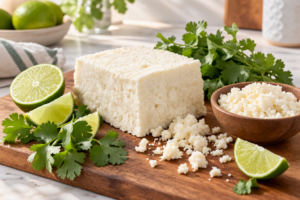
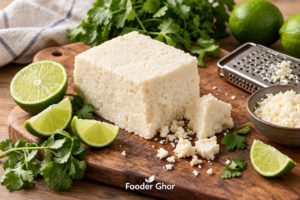
Fresh cotija cheese naturally features a clean, sharp, salty taste with pale white curds.
If you are curious about natural flavor profiles, you can read our full article on what is cotija cheese to explore its authentic taste.
Does Expired Cotija Cheese Go Bad?
Yes, expired cotija cheese will go bad rapidly once natural packaging seals break down and protective quality wears off. While an unopened package might survive a few days past the date, natural degradation is inevitable.
Always inspect older packages closely before serving them to your family.
How to Tell If Cotija Cheese Is Bad?

You can tell if cotija cheese is bad by checking for distinct visual changes, sour odors, altered texture, and off-tasting flavors. Sensory inspection provides reliable confirmation before eating.
Does Cotija Cheese Smell Bad When Spoiled?
Spoiled cotija cheese emits a strong sour, rancid, or ammonia-like odor that differs sharply from its normal salty scent. If opening the package reveals an aggressive pungent smell, discard it immediately.
Visual Signs of Bad Cotija Cheese
Visual signs of bad cotija cheese include green, grey, or dark mold spots, severe yellowing, and a slimy or excessively wet surface texture.
According to the USDA Food Safety and Inspection Service (FSIS), moldy soft cheeses and shredded, sliced, or crumbled cheeses should be discarded entirely because mold roots can spread deep into crumbled dairy. However, if a solid hard block of Cotija develops surface mold, you can safely salvage it by cutting away at least 1 inch around and below the mold spot without touching the mold with your knife.
Proper container management keeps other dairy products fresher for longer, so explore our simple guide on how to store feta cheese safely.
Can You Use Spoiled or Bad Cotija Cheese?
No, you cannot use spoiled or bad cotija cheese for eating, cooking, or baking recipes. Unlike slightly sour milk which works in pancake batters, spoiled cotija cheese contains dangerous mold spores and bacterial toxins.
Discarding questionable dairy remains the safest action for family health. If you are unsure whether a dairy product is still safe to use, see our guide on how long does evaporated milk last for common spoilage signs.
Cotija Cheese Spoiling vs. Going Bad: Is There a Difference?
Yes, there is a key difference between natural drying (spoiling) and actual unsafe contamination (going bad):
Natural Drying / Minor Aging: Cotija cheese losing moisture or becoming extra hard over time is a natural aging process. As long as the cheese smells fresh and has no mold, it is safe to grate over warm meals.
Spoilage / Going Bad (Unsafe): Cotija cheese is spoiled when it develops a sharp sour smell, green mold spots, a slimy film, or a bitter taste. At this stage, it is unsafe and must be discarded immediately.
To understand how fresh dairy fits into balanced home meal planning, consider reviewing our guide on cotija cheese benefits.
Can Spoiled Cotija Cheese Make You Sick?
Spoiled cotija cheese can make you sick by introducing harmful foodborne pathogens into your digestive system. Consuming bad curds disrupts normal stomach function.
According to the FDA, contaminated fresh and soft cheeses, including some Mexican-style cheeses, can carry Listeria monocytogenes. Listeria infection can cause serious illness, particularly in pregnant women, newborns, older adults, and people with weakened immune systems. Improper storage can also increase food safety risks.
If you want to read more about other dairy safety considerations, feel free to review our preliminary overview on ricotta cheese side effects.
What Happens If You Eat Spoiled Cotija Cheese?
If you eat spoiled cotija cheese, your body reacts by trying to expel dangerous toxins, often causing gastrointestinal distress within a few hours.
Common symptoms include stomach cramping, nausea, vomiting, diarrhea, and mild fever. Drink plenty of water to maintain hydration if mild symptoms develop.
Common Cotija Cheese Side Effects from Spoilage
Consuming spoiled cotija cheese leads to unwanted digestive side effects caused by bacterial toxins. These physical reactions range from mild upset stomach to severe foodborne illness.
Here are primary spoilage-related side effects to monitor:
Stomach Cramping: Abdominal pain caused by intestinal irritation from bacterial toxins.
Nausea and Vomiting: Immediate bodily defense mechanisms attempting to clear harmful food.
Diarrhea: Rapid fluid loss triggered by digestive tract inflammation.
Low-Grade Fever: Immune system responses fighting off mild bacterial infections.
For more details on possible reactions and other concerns, read our guide on cotija cheese side effects to learn what to consider when eating cotija cheese.
Why Trust Fooder Ghor?
At Fooder Ghor, we provide educational resources focused on understanding the safe use, handling, and storage of different types of milk, including breast milk, cow’s milk, goat milk, and raw milk, based on publicly available guidance from trusted sources such as the CDC, FDA, USDA, and AAP. Some milk-related articles, particularly those involving maternal and infant feeding topics, are reviewed for clarity and presentation by nursing students with academic training in maternal and child health to help make information easier to understand. This content is provided for learning purposes only and does not offer medical advice.
Frequently Asked Questions
Unopened commercial cotija cheese generally stays safe for 1 to 2 weeks past its use-by date if maintained under continuous 40°F refrigeration.
No, eating opened cotija cheese after 2 months is unsafe. Even if no visible mold is present, spoilage bacteria levels increase significantly after 2 to 4 weeks.
No, while hard blocks can sometimes be trimmed, crumbled or pre-packaged cotija should be discarded entirely if mold appears to prevent invisible toxin ingestion. If you want to understand what nutrients cotija provides, read our guide on cotija cheese nutrition facts for a closer look at its protein, fat, sodium, calcium, and other key nutrients.
Stay hydrated by drinking clean water, monitor your digestive symptoms, and seek medical advice if severe discomfort persists.
Yes, crumbled cotija cheese has a higher surface area exposed to oxygen, which causes it to dry out and spoil faster than solid blocks.
Conclusion
Understanding how long cotija cheese lasts is essential for keeping your kitchen safe and avoiding unnecessary food waste. Sealed commercial containers keep well for months under refrigeration, while opened packages are best consumed within 2 to 4 weeks. Always discard cotija cheese left out for over 2 hours or showing clear spoilage signs like sour smells and mold.
Also, if you want to understand how long other specialty cheeses stay fresh in home refrigerators, you can check our complete guide on how long does cream cheese last.