Skip to content



Fresh coconut milk has a rich aroma and naturally sweet taste that canned varieties simply cannot match. If you want to know how to make coconut milk from fresh coconut, the traditional method relies on simple mechanical extraction using warm water and freshly grated coconut meat. Preparing homemade coconut milk allows you to control the thickness without adding emulsifiers, preservatives, or artificial thickeners. Many home cooks prefer this approach because it yields pure milk suitable for both savory curries and sweet desserts. Understanding how to make coconut milk at home gives you full control over ingredient quality and freshness.
Short Summary
Making homemade coconut milk requires fresh brown coconuts, warm water, a grater, and a fine cheesecloth.
The basic ratio for thick coconut milk is one medium coconut to one cup of warm water.
Extracting coconut milk involves two stages to yield both thick cream and thin milk.
Freshly extracted coconut milk lasts up to four days in the refrigerator when stored in sealed glass containers.
Traditional manual extraction preserves the natural fats and delicate sweet flavor without chemical additives.
Technical Ratios: How Many Coconuts and How Much Water to Use?
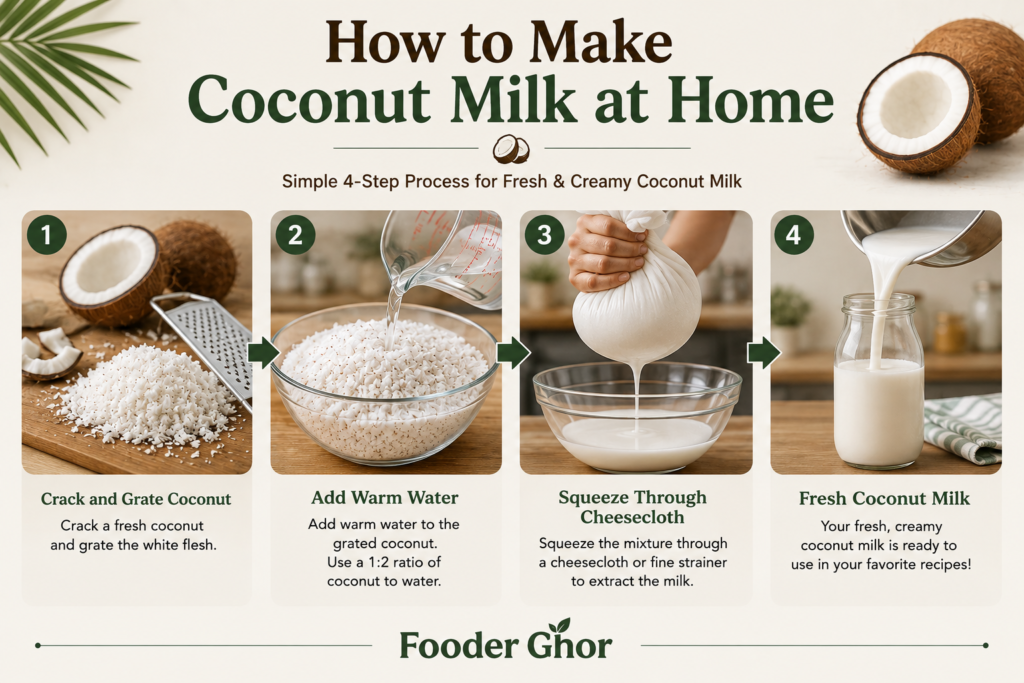
Extracting pure liquid from whole coconuts requires a balanced proportion of liquid to grated meat. For a standard batch of thick milk, one mature medium coconut yields approximately two cups of grated meat, which pairs with one cup of warm water. If you need a lighter consistency for daily cooking or smoothies, you can increase the liquid to two cups of water per coconut.
| Desired Consistency | Whole Coconuts Needed | Grated Coconut Yield | Warm Water Volume | Expected Milk Output |
| Extra Thick Cream | 1 Medium Coconut | 2 Cups | 0.75 to 1 Cup | 1 Cup |
| Standard Everyday Milk | 1 Medium Coconut | 2 Cups | 1.5 to 2 Cups | 2 Cups |
| Light Thin Milk | 1 Medium Coconut | 2 Cups | 3 Cups | 3 Cups |
When planning a larger recipe, you might wonder how many coconuts to make coconut milk for a family meal. Two average mature coconuts typically produce about one liter of balanced, medium-thick milk. Knowing how much water to make coconut milk with depends entirely on whether you prefer a rich culinary cream or a drinkable beverage base. Using warm water is essential because it helps dissolve the natural oils bound within the dense coconut flesh.
You can also explore how to make soy milk if you enjoy preparing plant-based dairy alternatives from scratch in your kitchen.
Gathering Your Kitchen Tools and Ingredients
Preparing fresh coconut milk at home requires minimal equipment, making it an easy task for everyday cooking. You will need a mature brown coconut with noticeable liquid sloshing inside, as young green coconuts lack the thick fat layer needed for rich milk.
In general, setting up your workspace with the right tools ensures smooth extraction. Here is what you need to gather before starting your recipe:
A heavy instrument or hammer to crack open the tough outer coconut shell.
A traditional hand grater or a modern food processor to shred the hard white flesh.
Warm water heated to approximately 110 degrees Fahrenheit to release coconut oils.
A large glass bowl to collect the freshly squeezed liquid.
A multi-layer cheesecloth or nut milk bag to strain fine coconut pulp.
For most people, using a nut milk bag provides better leverage when squeezing out the liquid compared to a fine mesh strainer. Clean tools prevent contamination and extend the shelf life of your finished product. If you plan to store extra batches, you should review how to store coconut milk properly to maintain freshness over several days.
Step-by-Step Recipe to Extract Base Milk From Scratch
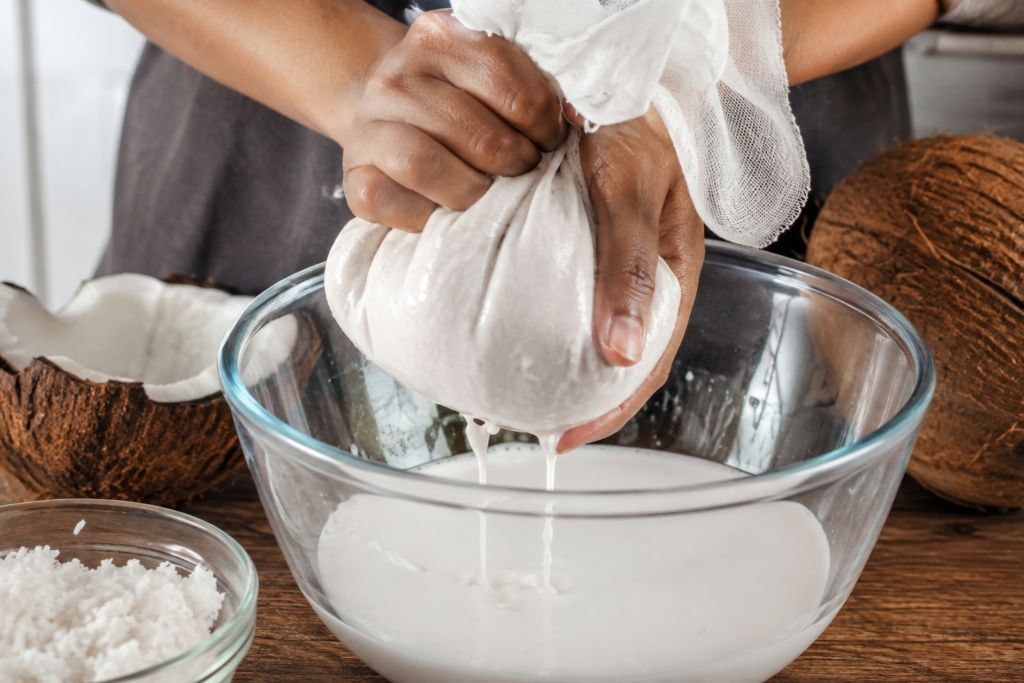
Extracting rich milk from a whole coconut follows a time-tested culinary technique passed down through generations. This hands-on process extracts both the rich cream and the lighter liquid through repeated pressing.
Step 1: Drain and Crack the Fresh Coconut
Locate the three dark eyes at the top of the coconut shell and pierce the softest one using a clean screwdriver or skewer. Drain the clear coconut water into a glass and set it aside. Use a hammer to firmly tap around the center equator of the shell until it splits into two halves.
Families who regularly use homemade plant milk should also check coconut milk nutrition facts to balance their daily caloric intake.
Step 2: Grate the White Coconut Meat
Carefully pry the thick white meat away from the hard outer shell using a butter knife. You can leave the thin brown skin attached, or peel it off if you prefer pure white milk. Shred the meat finely using a traditional hand grater or pulse it in a food processor until fine shreds form.
Step 3: Steep with Warm Water
Place the freshly grated coconut into a large mixing bowl. Pour warm water over the shreds until they are completely submerged. Allow the mixture to sit for five to ten minutes. One important thing to know is that warm water softens the natural plant tissues and releases locked-in saturated fats.
For everyday cooking, knowing does coconut milk go bad helps you identify early signs of spoilage like sour odor or off-color appearance.
Step 4: Squeeze out the First Extraction (Thick Milk)
Transfer the soaked coconut pulp into a cloth strainer placed over a bowl. Gather the edges of the cloth and twist the top tightly. Squeeze the bundle firmly using both hands to press out the rich, creamy liquid. This first pressing yields heavy coconut cream, which works well in rich curries and sweet desserts.
Additionally, reviewing soy milk shelf life offers a great benchmark for comparing different homemade dairy-free alternatives.
Step 5: Perform the Second Extraction (Thin Milk)
Return the squeezed coconut pulp back to the mixing bowl and add another cup of warm water. Knead the pulp again for a couple of minutes and squeeze out the liquid through the cloth bag. This second pressing produces a thinner milk that is ideal for light soups, steaming rice, or daily drinking.
Knowing coconut milk how to make correctly helps you avoid wasting valuable fats left in the fiber. The USDA recommends handling fresh foods safely and refrigerating perishable foods promptly to help maintain freshness and reduce food-safety risks. Keep freshly prepared coconut milk in a clean, covered container and refrigerate it promptly. To monitor safety limits after extraction, you can read about how long does coconut milk last in standard household settings.
Health Benefits and Considerations of Fresh Coconut Milk
Fresh coconut milk offers a nutrient-rich profile packed with medium-chain triglycerides that provide quick energy for active households. In many cases, families choose homemade coconut milk because it is naturally lactose-free, gluten-free, and completely vegan.
Another reason people choose it is its rich culinary versatility and satisfying texture. However, because coconut milk is naturally high in calories and saturated fats, moderation is key for daily dietary balance. Exploring coconut milk benefits can help you understand how these natural fats support energy levels.
Why Trust Fooder Ghor?
At Fooder Ghor, we provide educational resources focused on understanding the safe use, handling, and storage of different types of milk, including breast milk, cow’s milk, goat milk, and raw milk, based on publicly available guidance from trusted sources such as the CDC, FDA, USDA, and AAP. Some milk-related articles, particularly those involving maternal and infant feeding topics, are reviewed for clarity and presentation by nursing students with academic training in maternal and child health to help make information easier to understand. This content is provided for learning purposes only and does not offer medical advice.
Most Common Frequently Asked Questions
In general, you need two medium-sized mature coconuts to produce one liter of standard coconut milk. This calculation assumes you perform both a first and second extraction using warm water.
Yes, you can reuse the coconut pulp for a second extraction to yield thinner milk. However, a third extraction usually results in a watery liquid with very little flavor or fatty content.
Warm water is highly recommended because heat loosens the solid fats within the coconut flesh. Using cold water solidifies the natural coconut oil, making it difficult to squeeze out rich milk.
Separation is a natural process because homemade milk lacks chemical emulsifiers. The light coconut fat rises to the top while water settles at the bottom; simply shake the jar to recombine them.
Conclusion
Learning how to make coconut milk from fresh coconut is a rewarding kitchen skill that brings authentic flavor to your home meals. By selecting mature coconuts, using correct warm water ratios, and following a two-step extraction process, you can produce rich coconut cream and light milk without artificial additives. Always store your fresh creation in clean glass jars inside the refrigerator to maintain optimal taste and safety for your family recipes.
At the same time, checking coconut milk side effects ensures that individuals with specific dietary sensitivities consume it safely.