Skip to content


Why Starting Right Matters
For many new moms in the U.S., pumping breast milk can feel both empowering and overwhelming. Whether you’re preparing to return to work, building a freezer stash, or simply sharing feeding duties with your partner, knowing how to start pumping correctly makes all the difference.
Most moms know when to begin expressing, but not how to get started the right way. This guide breaks down every step on how to start pumping breast milk — from setting up your first session to building a comfortable routine that keeps your supply strong and your body relaxed.
Quick Guide: How to Start Pumping Breast Milk at a Glance
-
Preparation: Find a quiet spot, massage gently, and stay relaxed to trigger letdown.
-
The Right Gear: Choose between manual, electric, or wearable pumps based on your lifestyle.
-
The Perfect Fit: Use the correct flange size (typically 21–24 mm) to avoid pain and maximize output.
-
Cleanliness: Follow CDC guidelines—wash hands and sterilize pump parts daily.
-
Storage: Remember the 4-4-6 rule (4 hours room temp, 4 days fridge, 6+ months freezer).
1. Prepare Mentally and Physically Before Pumping
Before you even touch the pump, take a few minutes to get comfortable and relaxed. Stress can slow your milk letdown reflex — the process that allows milk to flow easily.
Tips:
- Find a quiet, private spot where you won’t be interrupted.
- Look at your baby’s photo or listen to their coos — it helps trigger letdown.
- Gently massage your breasts or apply a warm compress for 2–3 minutes to stimulate flow.
This small prep helps your first pumping experience feel calm, natural, and successful.
👉 If you haven’t read it yet, check out When Should You Start Expressing Breast Milk? (U.S. Guide 2025) for timing insights before you begin.
2. Choose the Right Pump for Your Needs
There are three main types of breast pumps:
- Manual Pump: Best for occasional use or travel. Affordable, portable, but requires hand effort.
- Electric Pump: Great for daily use and efficient milk removal. Most working moms prefer this option.
- Wearable Pump: Newer models that allow discreet, hands-free pumping — ideal for multitasking.
If you’re unsure which to pick, check your insurance coverage — many U.S. moms can get a high-quality pump for free under federal law.
Pro Tip: Once you choose your pump, the next safety step is deciding how to store your “liquid gold.” We recommend checking our USA buying guide for storage containers to ensure you’re using BPA-free and leak-proof options that match your specific pump model.
3. Get Familiar with the Pump Parts and Cleaning Routine
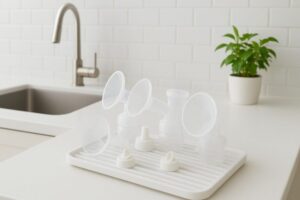
Cleanliness is crucial. Before each session:
- Wash your hands thoroughly with warm water and soap.
- Ensure the pump parts — flanges, valves, and bottles — are fully clean and dry.
- After each session, rinse parts immediately, then wash with warm, soapy water or sterilize once daily.
👉 According to the CDC, improper cleaning can lead to bacterial growth and contamination. Always air-dry parts on a clean surface — not inside a closed towel.
4. Learn Proper Flange Fit and Pump Setup
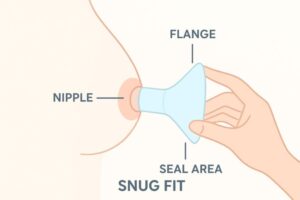
The flange (the funnel part of your pump) should fit your nipple snugly without pinching. If it’s too tight, it can hurt; too loose, and you’ll lose suction.
A proper fit ensures comfort and better milk output. Most moms need 21–24 mm flanges, but sizes vary.
If you feel pain, tugging, or redness, switch sizes or consult a lactation consultant.
Setup checklist:
- Center nipple in the flange opening.
- Start on low suction, then gradually increase until comfortable.
- Use gentle suction, not maximum — stronger doesn’t mean faster!
5. How to Start Pumping Breast Milk with a Gentle Routine
Most sessions last between 15–20 minutes. For a deeper look at how long to pump based on your milk flow and supply goals, check out our How Long Do I Pump Breast Milk? duration guide.
6. Store Milk Safely After Each Session
Once you’ve finished pumping:
- Label each bottle or bag with the date and time.
- Store freshly pumped milk at room temperature for up to 4 hours, in the refrigerator for up to 4 days, or freezer for 6–12 months (based on CDC guidelines).
- Avoid mixing warm and cold milk — let the new batch cool first.
👉 You can also read our full guidance about How to Store Breast Milk on the Go? (U.S. Travel & Cooler Guide).
7. Understand Early Expression and Colostrum
In the first few days after birth, your body produces colostrum — thick, golden milk rich in antibodies. It’s normal to get just a few drops during this time.
You can collect colostrum manually using hand expression before switching to a pump once your milk “comes in.”
Hospitals often encourage antenatal (pre-birth) colostrum collection for diabetic or high-risk moms — always consult your doctor before trying this.
8. Overcoming Common Pumping Challenges
If you’re struggling with low milk output, don’t worry. Many U.S. moms use the 555 Pumping Rule or Power Pumping to boost supply naturally in just a few days.
Remember: it takes a few days for your body to adjust to pumping — patience and routine make all the difference.
9. Finding Your Perfect Pumping Rhythm
Consistency is key. While you should aim for a regular rhythm in the early weeks, your exact daily schedule depends on your baby’s age. See our How Often Should I Pump Breast Milk? guide for a customized pumping timetable.
10. When to Seek Help from a Lactation Consultant
If you’re facing persistent pain, low output, or emotional burnout — reach out to an IBCLC-certified lactation consultant. The CDC recommends professional support if breastfeeding or pumping challenges interfere with your baby’s nutrition or your own well-being. Additionally, the USDA’s WIC program provides extensive breastfeeding resources and consultant access for many U.S. families to ensure long-term success.
They can help you:
-
Adjust your pump setup and flange fit.
-
Optimize your pumping schedule.
-
Manage supply concerns or discomfort.
For more support, visit:
Why Trust Fooder Ghor?
At Fooder Ghor, we provide educational resources focused on understanding the safe use, handling, and storage of different types of milk, including breast milk, cow’s milk, goat milk, and raw milk, based on publicly available guidance from trusted sources such as the CDC, FDA, USDA, and AAP. Some milk-related articles, particularly those involving maternal and infant feeding topics, are reviewed for clarity and presentation by nursing students with academic training in maternal and child health to help make information easier to understand. This content is provided for learning purposes only and does not offer medical advice.
FAQ: Common Questions About Starting to Pump
Q: How soon should I start pumping after birth?
Usually, after the first 2–3 weeks, if breastfeeding is going smoothly, or sooner if the baby is in NICU or you’re exclusively pumping.
Q: Should I pump right after feeding?
Yes — that’s the best time to signal your body to produce more milk.
Q: Can I mix milk from multiple pumping sessions?
Yes, as long as both are the same temperature. Chill the new milk first before mixing with cold milk.
Q: How can I make pumping more comfortable?
Relax, massage before pumping, and always ensure the correct flange size.
Conclusion: Start Gently, Stay Consistent, Trust Yourself
Learning how to start pumping breast milk isn’t about perfection — it’s about progress. Every session helps your body learn, adapt, and provide nourishment for your baby.
Take your time, follow your comfort level, and remember — it’s completely normal to learn as you go.
With the right routine and mindset, pumping becomes not just easy but empowering.