Skip to content

Goat milk and coconut milk are great, but homemade cashew milk has become a popular choice in many homes due to its incredibly creamy texture, mild flavor, and simple preparation. For most people, learning how to make cashew milk at home is a game-changer because it requires very little time and provides a fresh, nutrient-rich kitchen staple without any artificial additives.
In this traditional cashew milk recipe, we will guide you through the classic soaking method to achieve a smoother consistency that works well in soups and sauces, desserts, or your daily morning coffee.
Short Summary
Primary Focus: Learn a simple, traditional step by step cashew milk recipe using raw cashews and fresh water.
Key Equipment: A high-speed blender is highly recommended, while a nut milk bag or fine strainer remains a helpful, optional tool.
Main Benefit: This homemade cashew milk requires no mandatory straining, making it a zero-waste and family-friendly dairy alternative.
Storage Limit: Properly stored in the refrigerator, this fresh beverage stays delicious and safe for up to 3 to 5 days.
Once you’ve learned how to make it at home, explore the full cashew milk benefits guide to understand its nutritional value, potential health advantages, and how it can fit into a balanced diet.
Kitchen Tools Needed for Traditional Cashew Milk
To begin your homemade cashew milk journey, you only need a few basic items that are commonly found in most kitchens. Having the right tools ready makes the entire process incredibly quick and easy.
First, a high-speed blender is the single most important tool because its powerful motor breaks down the nuts into a perfectly smooth consistency. Second, you will need accurate measuring cups to ensure the ideal ratio of nuts to water for a richer texture. Lastly, a fine mesh strainer or a nut milk bag is useful for everyday cooking if you prefer an absolutely flawless fluid, though it is often not necessary for cashews.
Pro Tip: If you own an automatic appliance, you can also learn more about using specialized gadgets in our comprehensive how to make cashew milk in nut milk maker guide.
Ingredients for Homemade Cashew Milk

The beauty of a traditional cashew milk recipe lies in its short, clean, and pantry-friendly ingredient list. You do not need any thickeners or chemical preservatives to achieve a commercial-quality beverage.
The primary ingredient is whole raw cashews, which provide the essential healthy fats and natural sweetness needed for a creamy base. You will also need clean, filtered water for both the soaking phase and the actual blending process. Finally, adding a small pinch of sea salt is a reliable way to balance the flavors and enhance the natural creaminess of the dairy-free alternative.
| Ingredient | Standard Measurement | Purpose in Recipe |
| Raw Cashews | 1 Cup (Whole, unroasted) | Creates the rich, creamy texture and nutty base |
| Filtered Water | 3 to 4 Cups (Fresh) | Determines the thickness and consistency |
| Sea Salt | 1 Pinch (Optional) | Balances the flavor and enhances sweetness |
After preparing your homemade batch, learn how long does cashew milk last so you can store it properly and enjoy the best quality and freshness.
Step-by-Step Instructions: The Soaking Method
Following a proper step by step cashew milk recipe ensures that your final beverage has the perfect mouthfeel and stays fresh. This classic method is widely used in most kitchens because it guarantees the best results.
Step 1: Soaking the Cashews

Placing your raw nuts in a bowl and covering them with clean water is the first vital step of this preparation. You should let the cashews soak at room temperature for about 4 to 6 hours, or leave them in the refrigerator overnight. This process softens the nut fibers, making them incredibly easy to blend and much gentler on your digestive system. Once the time is up, make sure to discard the old soaking water and thoroughly rinse the softened cashews under cold running water.
The FDA recommends washing hands, using clean utensils, and preventing cross-contamination when preparing foods at home to reduce the risk of foodborne illness. If you are in a rush and do not have hours to spare, you can find a faster alternative in our how to make cashew milk without soaking guide.
Step 2: Blending to Perfection

After rinsing your softened nuts, place them directly into your high-speed blender chamber along with three to four cups of fresh filtered water and your pinch of salt. Secure the lid tightly and start blending on a low speed, then gradually increase it to the maximum setting. Let the machine run continuously for 1 to 2 minutes until the liquid looks perfectly white, frothy, and uniform without any visible small pieces of nuts left at the bottom.
Once your cashew milk is blended, proper storage is essential to maintain its freshness and quality. Read our guide on how to store cashew milk for practical tips on refrigeration and safe storage.
Step 3: Straining (Optional)
One important thing to know is that cashews do not leave behind a heavy, gritty pulp like almonds do, which means straining is usually a completely optional step. However, if you are using a standard blender or want an ultra-smooth consistency for delicate recipes, you can pour the liquid through a clean nut milk bag or a fine sieve. Gently squeeze the bag with clean hands to collect every single drop of milk into a clean glass jar.
Because the entire blended cashew remains in the beverage, unstrained homemade cashew milk may retain more of the nut’s naturally occurring fiber than strained versions. The USDA FoodData Central database provides nutrient information for nuts and nut-based foods, although the exact nutrition of homemade cashew milk depends on your recipe and preparation method.
Does Cashew Milk Need to Be Pasteurized?
Homemade cashew milk does not need to be pasteurized if it is prepared using clean equipment, refrigerated immediately, and consumed within 3 to 5 days. However, because it does not undergo commercial processing, it has a much shorter shelf life than store-bought varieties and requires careful handling to reduce the risk of spoilage.
According to the FDA Pasteurized Milk Ordinance (PMO), pasteurization is a heat treatment used to reduce harmful microorganisms in milk. Although this guidance is written for dairy milk, it demonstrates the importance of proper heat treatment and safe food handling practices when preparing beverages at home.
How to Pasteurize Cashew Milk
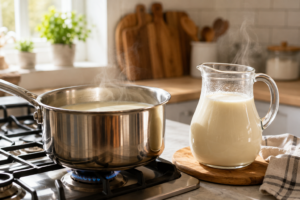
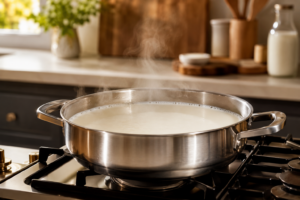
If you want to pasteurize homemade cashew milk, pour it into a clean saucepan and heat it slowly over medium heat while stirring continuously. Using a food thermometer, heat the milk to 161°F (72°C) for at least 15 seconds, following the High-Temperature Short-Time (HTST) pasteurization method described in the FDA Pasteurized Milk Ordinance (PMO). Avoid bringing the milk to a full boil, as excessive heat may affect its flavor and texture.
Once heated, cool the cashew milk as quickly as possible by placing the container in an ice-water bath. Transfer it to a clean, airtight glass bottle or food-grade container and refrigerate it immediately. Even after home pasteurization, homemade cashew milk should be stored in the refrigerator and consumed within 3 to 5 days for the best quality and freshness.
If you’re wondering how heat treatment affects milk safety and shelf life, explore our guide on pasteurized vs unpasteurized milk to understand the key differences, benefits, and potential risks.
Why Trust Fooder Ghor?
At Fooder Ghor, we provide educational resources focused on understanding the safe use, handling, and storage of different types of milk, including breast milk, cow’s milk, goat milk, and raw milk, based on publicly available guidance from trusted sources such as the CDC, FDA, USDA, and AAP. Some milk-related articles, particularly those involving maternal and infant feeding topics, are reviewed for clarity and presentation by nursing students with academic training in maternal and child health to help make information easier to understand. This content is provided for learning purposes only and does not offer medical advice.
Frequently Asked Questions
Yes, soaking is necessary to get a traditional creamy texture and make blending much easier. If you are short on time, you can follow our how to make cashew milk without soaking guide.
Homemade cashew milk can taste bland or unusual if you do not add a pinch of salt, honey, or vanilla extract. Also, failing to soak the nuts long enough prevents a smooth texture, which makes the overall flavor feel unappealing.
Yes, you can use a standard blender, but you will need to blend for a longer time and use a nut milk bag or strainer afterward to get a perfectly smooth, particle-free texture.
Conclusion
In simple terms, learning how to make cashew milk at home is a rewarding, healthy, and easy option for any family. By following the classic soaking method and using a reliable blender, you can create a velvety beverage that serves as an excellent kitchen staple for everyday recipes. Always remember to store your fresh batch in a cold refrigerator and consume it within 5 days for the best quality. For more insights into dairy-free storage timelines, feel free to check our detailed guide on how long does cashew milk last.
Always remember to store your fresh batch in a cold refrigerator and consume it within 3 to 5 days for the best quality. Before making homemade cashew milk a regular part of your diet, you may also want to read our guide on cashew milk side effects to understand potential allergy concerns and other important considerations.