Skip to content

Gouda cheese smooth, nutty, and rich is one of the most versatile cheeses in American kitchens. Whether you’re making grilled sandwiches, casseroles, or cheese platters, it’s always a favorite. But what if you’ve bought more than you can finish? Can gouda cheese be frozen safely without ruining its flavor and texture?
The short answer: Yes, you can freeze gouda cheese if you follow proper storage and thawing methods. This guide explains everything you need to know about freezing, defrosting, and using gouda while keeping it flavorful and safe.
Why Gouda Freezes Better Than Soft Cheeses
Unlike brie or blue cheese, gouda has a semi-hard texture and lower moisture content. This makes it more freezer-friendly — it doesn’t crumble as easily and retains much of its flavor after thawing.
Still, freezing alters the cheese’s texture slightly, making it drier or more crumbly. That’s why frozen gouda is best used for cooking and melting, not for fresh cheese boards.
According to the U.S. Department of Agriculture (USDA), hard and semi-hard cheeses like gouda can be safely frozen for several months when wrapped correctly.
👉 👉 For more details, you can read our detailed guide on Can You Freeze Goat Cheese? to learn how different cheeses react to freezing.
What Happens to Gouda Cheese After Freezing?
Freezing makes Gouda slightly crumbly but keeps its flavor usable.
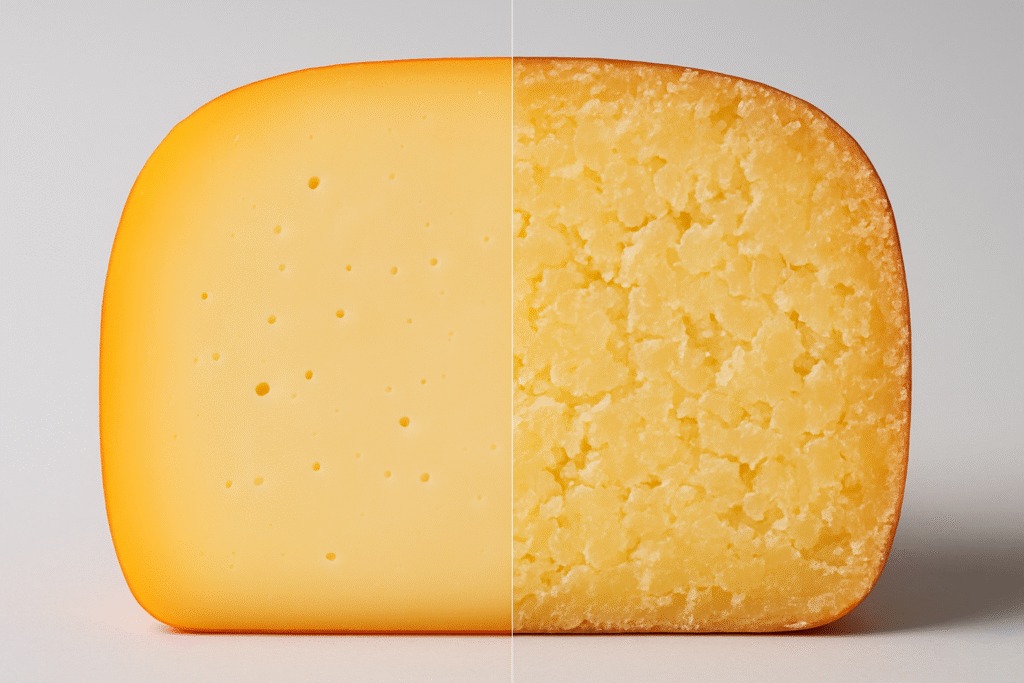
When Gouda cheese is frozen, small ice crystals form inside its structure. These crystals affect the protein and fat bonds that give Gouda its smooth and creamy texture.
After thawing, the cheese may feel slightly dry or crumbly. This change is completely normal and does not mean the cheese has spoiled. According to USDA Food Safety guidelines, freezing cheese is safe if wrapped properly and stored below 0°F. The texture change happens because of natural moisture loss, not spoilage.
The flavor of Gouda usually remains rich and nutty, especially when used in cooked dishes. The main difference after freezing is texture, not safety or taste quality.
How Freezing Changes Gouda Texture and Flavor
Freezing reduces creaminess and slightly changes Gouda’s texture.
Fresh Gouda is known for its creamy, smooth texture and mild buttery taste. However, freezing can reduce its moisture content, which slightly affects its mouthfeel.
After thawing, Gouda may feel less creamy and a bit firmer or crumbly. Younger Gouda, which has more moisture, tends to change more compared to aged Gouda.
Aged Gouda holds its structure and flavor better because of its lower moisture content. While texture may shift, the flavor remains strong enough for cooking and melting applications. You can learn more about cheese freezing safety at Dairy Research Institute. They explain how enzymes and fat structures in cheese respond differently to cold storage.
Step-by-Step: How to Freeze Gouda Cheese Properly
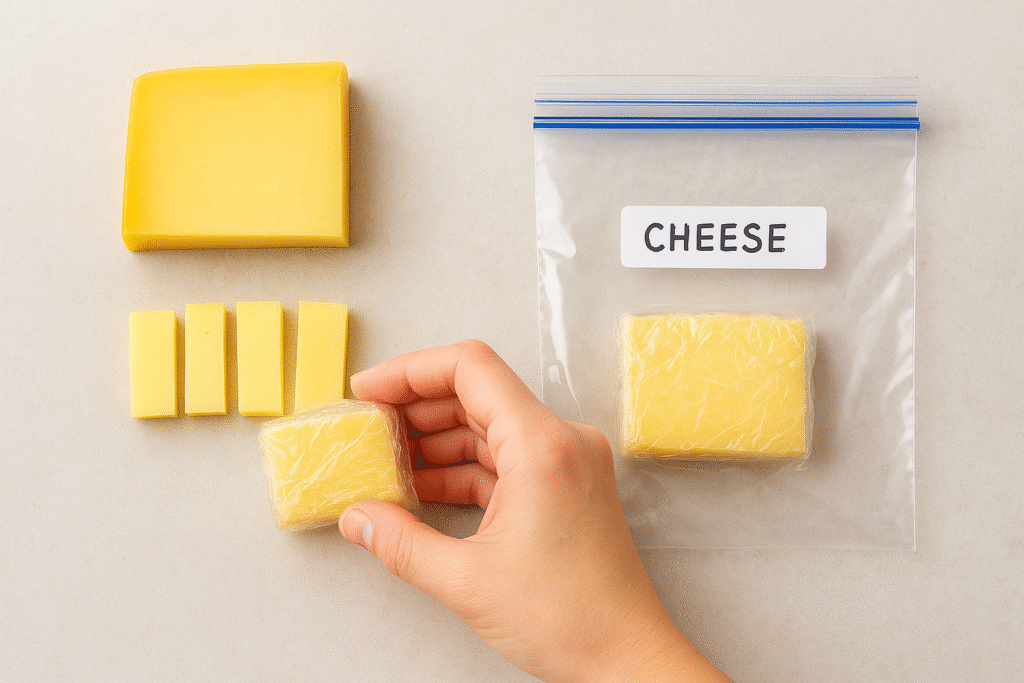
- Cut into Portions
Slice the cheese into ½-pound or smaller portions. Smaller pieces thaw more evenly and reduce waste. - Wrap It Airtight
Use plastic wrap or wax paper, then place each piece into a freezer-safe zip-top bag or vacuum-sealed pouch. Press out excess air before sealing. - Label and Date
Mark the freezing date with “Gouda – Frozen” to keep track of storage time. - Freeze Quickly
Place the wrapped portions toward the back of the freezer (the coldest area) where the temperature remains steady at 0°F (-18°C).
💡 Pro Tip: For shredded gouda, sprinkle a bit of cornstarch or flour before freezing. It helps prevent clumping and makes it easier to cook with later.
👉 According to the USDA Food Safety and Inspection Service, frozen dairy products like Gouda cheese should be stored at 0°F (-18°C) to maintain safety and preserve quality for a longer period.
Thawing Gouda Cheese Safely
To preserve flavor and prevent excess moisture loss:
- Step 1: Move the frozen gouda from the freezer to the refrigerator. Let it thaw slowly for 24–36 hours.
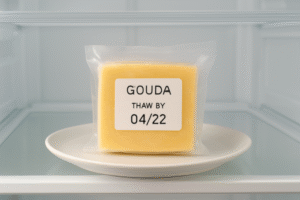
- Step 2: Once soft, remove the wrapping and pat dry with a paper towel if condensation forms.
- Step 3: Use thawed gouda within 3–5 days for best taste.
Never thaw cheese at room temperature it encourages bacterial growth and uneven texture.
👉 For more thawing insights, check our guide How to Unthaw Breast Milk Quickly? (Safe Speed-Thaw Guide for Busy Moms).
How to Improve Texture After Thawing
Slow thawing helps maintain Gouda texture and reduces dryness.
How you thaw Gouda plays a major role in its final texture. Always move frozen cheese to the refrigerator and allow it to thaw slowly over 24 to 36 hours.
Keep the cheese wrapped or inside an airtight container during thawing to prevent moisture loss.
Avoid thawing at room temperature, as it causes sweating and makes the cheese drier. For best results, use thawed Gouda in warm dishes where gentle heat helps soften its structure.
If you want, you can also learn our detaild guide about How Long Does Goat Milk last?
How Long Can Gouda Cheese Be Frozen?
When stored correctly at 0°F (-18°C):
- Whole block or sliced gouda lasts up to 6 months.
- Shredded gouda stays fresh for 2–3 months.
After thawing, always smell and inspect before use. Discard if it smells sour, feels sticky, or shows any mold growth (other than its natural wax rind).
👉 Compare with How Long Does Goat Cheese Last in the Fridge? to understand storage differences among cheeses.
Best Ways to Use Frozen Gouda

Since freezing can slightly change the texture, thawed gouda shines best in hot recipes, such as:
- Melted in grilled cheese sandwiches
- Added to casseroles or baked pasta
- Mixed into soups or chowders
- Sprinkled over pizza or omelets
Frozen gouda’s flavor remains rich, so it’s perfect for melting or baking rather than snacking.
Frozen Gouda is not ideal for serving on cheese boards due to its texture change. However, it performs extremely well in hot dishes where melting helps restore some of its creamy consistency.
Using heat-based recipes like pasta, casseroles, or grilled sandwiches helps bring back its best texture and flavor.
Expert Tip: Preserve Flavor and Texture
If you frequently buy cheese in bulk, consider investing in a vacuum sealer. It prevents freezer burn and helps gouda stay creamy after thawing.
According to the USDA Food Storage Guidelines, maintaining a constant freezing temperature below 0°F and using airtight packaging significantly extends cheese life while preventing flavor loss.
👉 For the official safety reference, see the FDA’s Food Freezing Recommendations and USDA Cold Storage Tips.
Practical Takeaway for Home Cooks
Freezing Gouda saves waste but works best for cooking use.
Freezing Gouda cheese is a smart way to reduce food waste and extend its usability in your kitchen.
Although the texture may change slightly, the cheese remains safe and flavorful. The key is to freeze it properly, thaw it slowly, and use it in recipes where melting enhances its quality.
For best results, always freeze Gouda in small portions and avoid refreezing after thawing.
Why Trust Fooder Ghor?
At Fooder Ghor, we provide educational resources focused on understanding the safe use, handling, and storage of different types of milk, including breast milk, cow’s milk, goat milk, and raw milk, based on publicly available guidance from trusted sources such as the CDC, FDA, USDA, and AAP. Some milk-related articles, particularly those involving maternal and infant feeding topics, are reviewed for clarity and presentation by nursing students with academic training in maternal and child health to help make information easier to understand. This content is provided for learning purposes only and does not offer medical advice.
FAQ: Freezing and Thawing Gouda
Yes, when wrapped tightly and stored below 0°F, gouda remains safe and flavorful for up to 6 months.
Absolutely. Just sprinkle a little flour or cornstarch before freezing to prevent clumping.
Yes, slightly. It may become more crumbly, which is fine for cooking or baking.
Check for sour smell, unusual stickiness, or visible mold (beyond the rind). Discard if any of these appear.
Conclusion: Freezing Gouda the Smart Way
So, can gouda cheese be frozen? Yes and when done right, it stays delicious for months. By wrapping it properly, freezing in small portions, and thawing slowly, you can reduce waste and always have flavorful cheese ready for recipes.