Skip to content


Managing family recipes while keeping a close eye on daily macro-nutrient consumption is essential for modern wellness. Healthy parents consistently track exactly what enters their kitchen pots to support their children’s growth parameters. Traditional baking, festive casseroles, and homemade cream soups frequently rely on pantry staples to provide an ideal velvety mouthfeel. However, monitoring the exact caloric load of these concentrated components can sometimes feel quite challenging.
Understanding the explicit details of evaporated milk nutrition empowers you to balance your household carbohydrate, lipid, and protein ratios accurately. This comprehensive, data-driven report breaks down commercial labels, evaluates specific serving sizes, and decodes every vital macro-nutrient.
What You Will Learn in This Guide
A complete data breakdown of the official commercial nutrition facts label.
Precise calorie measurements for individual tablespoons, full cups, and entire metal cans.
Comparative nutritional values across fat-free, skimmed, and light product variations.
Exact mineral percentages regarding dietary sodium, natural sugars, calcium, and vitamin D.
Complete clarity on commercial specialty options like Peak and coconut-flavored concentrates.
👉 If you are currently evaluating how this ingredient influences body wellness parameters or long-term heart profiles instead, read our explicit lifestyle report on is evaporated milk healthy.
Quick Answer: Evaporated Milk Nutrition Facts
Direct Answer: Per 1 cup (240ml) whole evaporated milk: 340 calories, 17g protein, 11g fat, 24g carbs, 24g sugar, 260mg sodium, 50% DV calcium, 25% DV vitamin D. Per 1 tablespoon (15ml): 20 calories.
Complete Nutrition Facts (USDA, Per 1 Cup):
| Nutrient | Whole | Low-Fat | Fat-Free |
|---|---|---|---|
| Calories | 340 kcal | 220 kcal | 200 kcal |
| Protein | 17g | 18g | 19g |
| Total Fat | 11g | 2.5g | 0.2g |
| Saturated Fat | 11g | 2.5g | 0g |
| Carbohydrates | 24g | 25g | 26g |
| Sugars (Lactose) | 24g | 25g | 26g |
| Fiber | 0g | 0g | 0g |
| Sodium | 260mg | 280mg | 300mg |
| Calcium | 50% DV | 50% DV | 50% DV |
| Vitamin D | 25% DV | 25% DV | 25% DV |
| Potassium | 10% DV | 10% DV | 10% DV |
According to the official USDA FoodData Central database, a standard two-tablespoon serving of traditional whole evaporated milk contains roughly 40 calories.
For complete health benefits and health-focused uses, read our guide on is evaporated milk healthy.
The Core Data: Evaporated Milk Nutrition Facts Label
Direct Answer: USDA official nutrition label for evaporated milk (per 1 cup/240ml whole): 340 calories, 17g protein, 11g fat, 24g carbs, 24g sugar, 260mg sodium, 50% calcium DV, 25% vitamin D DV.
Complete USDA Nutrition Facts Label (Per 1 Cup / 240ml Whole Evaporated Milk):
| Nutrient | Amount | % Daily Value |
|---|---|---|
| Calories | 340 kcal | – |
| Total Fat | 11g | 14% |
| Saturated Fat | 11g | 55% |
| Trans Fat | 0g | – |
| Cholesterol | 45mg | 15% |
| Sodium | 260mg | 11% |
| Total Carbohydrate | 24g | 9% |
| Dietary Fiber | 0g | 0% |
| Total Sugars | 24g | – |
| Includes Added Sugars | 0g | 0% |
| Protein | 17g | 34% |
| Vitamin D | 2.5mcg | 25% |
| Calcium | 500mg | 50% |
| Iron | 0.2mg | 1% |
| Potassium | 470mg | 10% |
According to the official USDA FoodData Central database, a standard two-tablespoon serving of traditional whole evaporated milk contains roughly 40 calories. This small portion provides a dense mix of vital macro-nutrients because the water has been systematically reduced.
👉 For complete nutritional breakdown and comparison with other dairy products, read our guide on is cow milk good for you.
Comprehensive Calorie Breakdown by Serving Size
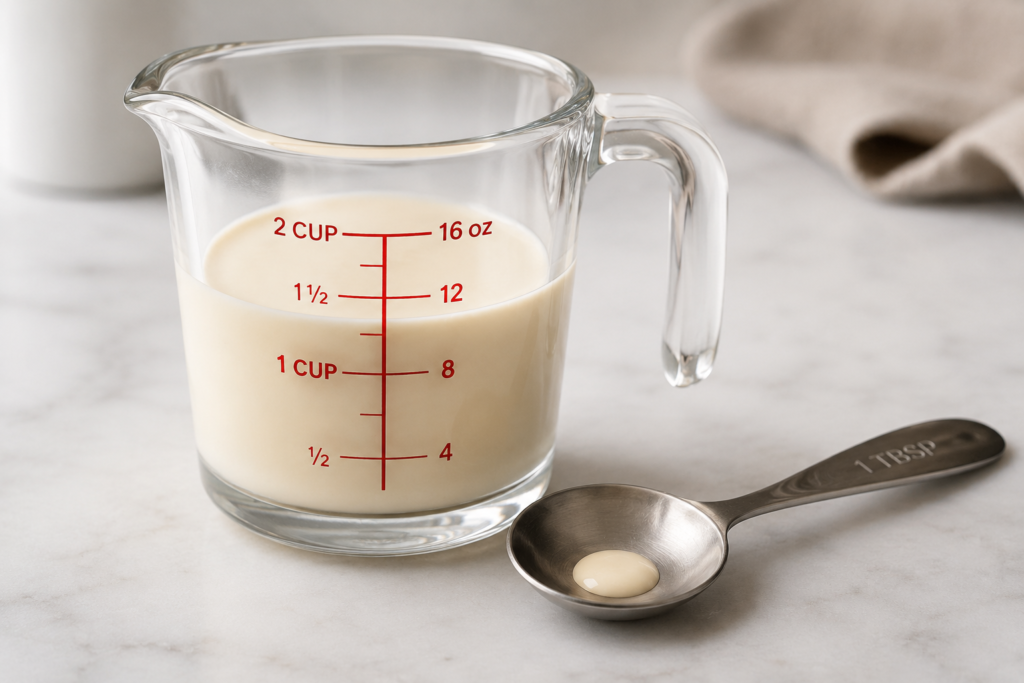
USDA says evaporated milk has 20 calories per 1 tablespoon (15ml), 40 calories per 2 tablespoons (30ml), and 340 calories per 1 cup (240ml).
According to the official USDA FoodData Central database, a standard 2-tablespoon serving of traditional whole evaporated milk contains exactly 40 calories.
Calorie Breakdown by Serving Size (USDA Data):
| Serving Size | Volume | Calories | Protein | Fat | Carbs |
|---|---|---|---|---|---|
| 1 Tablespoon | 15ml | 20 kcal | 1g | 1g | 1g |
| 2 Tablespoons | 30ml | 40 kcal | 2g | 2g | 2g |
| 1/4 Cup | 60ml | 85 kcal | 4g | 3g | 6g |
| 1/2 Cup | 120ml | 170 kcal | 8.5g | 5.5g | 12g |
| 1 Cup | 240ml | 340 kcal | 17g | 11g | 24g |
| 1 Can (12 oz) | 355ml | 500 kcal | 25g | 16g | 36g |
According to the U.S. Department of Agriculture (USDA), understanding serving sizes and calorie content is important for managing daily nutrient intake and maintaining balanced dietary habits across all age groups.
If you want to understand the basic formulation and processing of this ingredient, you can also read our guide on what is evaporated milk.
Evaporated Milk Nutrition Per 100g (USDA Standard)
Direct Answer: Per 100g whole evaporated milk: 144 calories, 7.8g protein, 5.2g fat, 11.5g carbs, 11.5g sugar, 125mg sodium.
Nutrition Per 100g (USDA Data):
| Nutrient | Whole | Low-Fat | Fat-Free |
|---|---|---|---|
| Calories | 144 kcal | 93 kcal | 85 kcal |
| Protein | 7.8g | 8.2g | 8.6g |
| Total Fat | 5.2g | 1.2g | 0.1g |
| Saturated Fat | 5.2g | 1.2g | 0g |
| Carbohydrates | 11.5g | 12g | 12.5g |
| Sugars (Lactose) | 11.5g | 12g | 12.5g |
| Sodium | 125mg | 135mg | 145mg |
| Calcium | 240mg | 240mg | 240mg |
| Vitamin D | 1.2mcg | 1.2mcg | 1.2mcg |
According to the U.S. Department of Agriculture (USDA), choosing low-fat or fat-free dairy products can help reduce saturated fat intake while still providing essential nutrients such as protein, calcium, and vitamins needed for a balanced diet.
👉 For detailed freezing instructions and storage tips, read our guide on how to store evaporated milk.
Cups and Large Recipe Volumes
When you are preparing massive family bakes or holiday custards, you will likely utilize larger liquid volumes. The calories in 1 cup evaporated milk jump significantly to approximately 340 kcal due to the dense milk solids. If your specific dinner instructions require a metric fluid measurement, the total calories is in 300ml evaporated milk reaches roughly 425 kcal.
👉 If you want to know the correct storage methods to keep evaporated milk fresh after opening, you can also read our guide on how to store evaporated milk.
Full Canister Calculations
Many holiday baking guides simply instruct parents to dump an entire standard commercial container directly into the batter. The total calories in 1 can evaporated milk (which typically measures 12 fluid ounces) equals roughly 500 kcal. Knowing this specific bulk number allows you to calculate the total energy density of your final baked goods easily.
Decoding Variants: Fat-Free, Nonfat, and Skimmed Nutrition
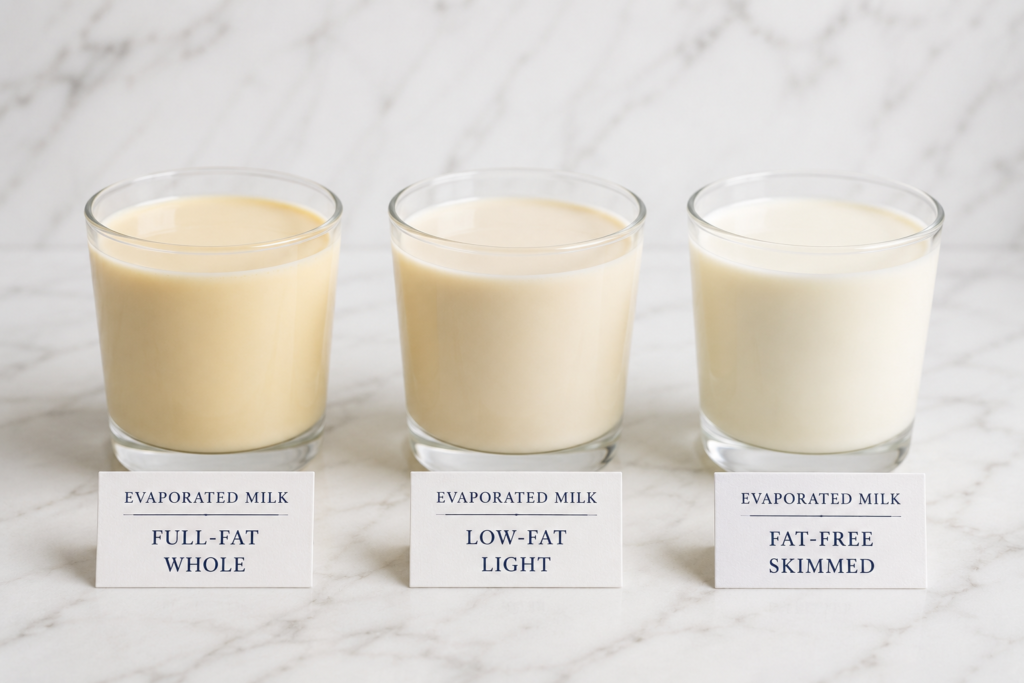
Supermarkets stock several different varieties of concentrated milk to accommodate distinct dietary preferences and medical requirements. Analyzing these labels helps you select the correct energy density for your family.
| Nutrient Component (Per 1 Cup) | Whole Concentrate | Low-Fat / Light | Fat-Free / Skim |
| Total Calories | 340 kcal | 220 kcal | 200 kcal |
| Total Protein | 17 g | 18 g | 19 g |
| Saturated Animal Fat | 11 g | 2.5 g | 0.2 g |
| Natural Lactose Sugars | 24 g | 25 g | 26 g |
According to the U.S. Department of Agriculture (USDA), choosing low-fat or fat-free dairy products can help reduce saturated fat intake while still providing essential nutrients such as protein, calcium, and vitamins needed for a balanced diet.
👉 If you want a deeper understanding of whether this ingredient is beneficial for your overall health, you can also read our guide on is evaporated milk good for you.
Fat Free Evaporated Milk Nutrition Facts
Choosing fat free evaporated milk nutrition options is an excellent way to maintain a strict caloric deficit. The total calories in fat free evaporated milk drops down to only 200 kcal per full cup measure. Looking closely at 12 ounces fat free evaporated milk nutrition, an entire can delivers roughly 300 calories while keeping fat lipids near zero. This variant provides an ideal method for packing clean protein into family meals.
According to the American Heart Association (AHA), choosing low-fat or fat-free dairy products can help reduce saturated fat intake while still providing important nutrients like protein and calcium, supporting overall heart-healthy eating patterns.
Low Fat and Light Alternatives
If you prefer a middle-ground option, low fat evaporated milk nutrition provides a great balance of texture and energy. The calories in light evaporated milk sit around 220 kcal per cup while preserving a decently creamy mouthfeel. Additionally, evaporated skim milk nutrition facts reveal an identical structure to nonfat variants, making it a stellar option for heart-conscious adult dining.
👉 If you want to compare plant-based alternatives and their nutritional profile, you can also read our guide on coconut milk nutrition.
Specialty Labels: Brand and Flavor Variations
Home cooks often encounter unique regional brands or flavored products when shopping for specific international culinary creations.
Calories in Peak Evaporated Milk
Peak is an incredibly popular global dairy brand known for delivering exceptionally creamy, high-quality shelf-stable products. The calories in peak evaporated milk track slightly higher than generic supermarket options because they maintain an optimized, rich butterfat percentage. A standard single tin of this premium brand delivers robust energy metrics that make it magnificent for rich sauces.
According to the U.S. Department of Agriculture (USDA), calorie content in dairy products varies depending on fat percentage and formulation, and full-fat dairy options generally provide higher energy density due to increased saturated fat content.
Calories in Coconut Flavoured Evaporated Milk
Modern food companies now manufacture hybrid products to offer unique flavor profiles for tropical desserts. The calories in coconut flavoured evaporated milk vary by brand but generally carry a slightly higher caloric footprint due to the natural fats present in coconut lipids. Always verify the backend nutrition label to ensure no extra cane syrups were introduced during the factory blending process.
👉 If you want to understand the full nutritional profile of coconut-based dairy alternatives, you can also read our guide on coconut milk nutrition.
Evaluating Alternative Ingredient Nutrition Metrics
To maximize your precision when tracking household macro-nutrients, comparing how different shelf-stable concentrates align is highly beneficial.
| Product Liquid Type | Carbohydrate Source | Primary Mineral Benefit | Ideal Recipe Integration |
| Traditional Whole Can | Natural Animal Lactose | Exceptional Calcium Supply | Holiday Pies & Baking |
| Fat-Free Skim Can | Concentrated Lactose | Maximized Dairy Protein | Low-Fat Savory Soups |
| Enzyme-Treated Can | Glucose & Galactose | Bone-Building Vitamin D3 | Lactose-Safe Desserts |
According to the U.S. Department of Agriculture (USDA), dairy products provide key nutrients such as calcium, protein, and vitamin D, and choosing between whole, low-fat, and fat-free options can help individuals meet their dietary and health goals.
👉 If you want to understand how plant-based alternatives compare in terms of health impact, you can also read our guide on is coconut milk bad for you.
Educational Infographic Guide – Fooder Ghor
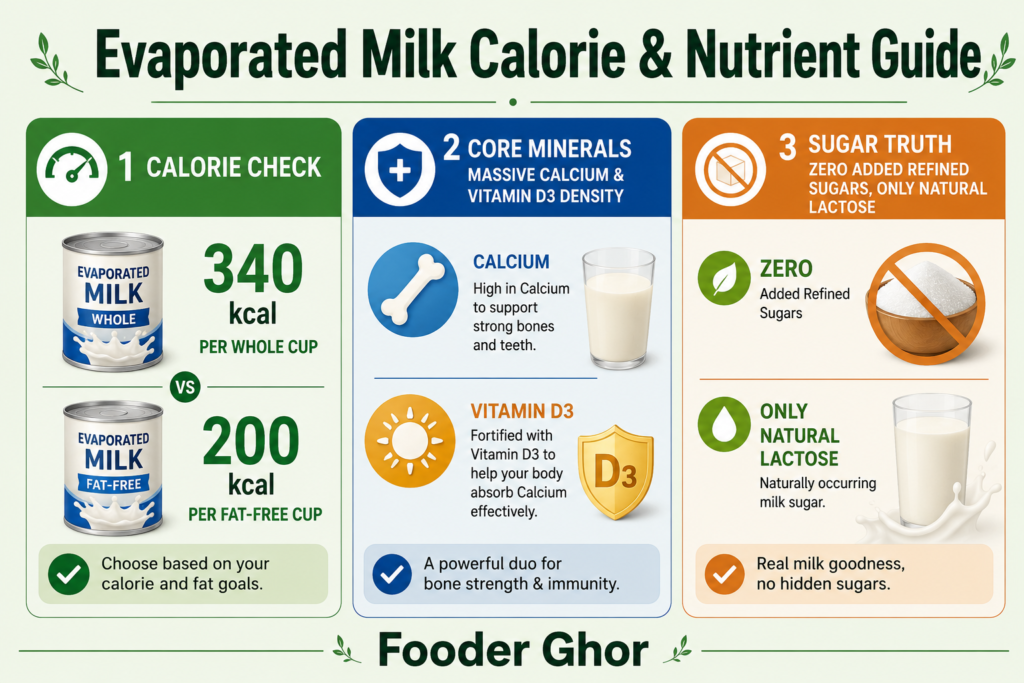
| Measurement Unit | Whole Milk Calories | Fat-Free Calories | Key Macronutrient |
| 1 Tablespoon (15ml) | 20 kcal | 12 kcal | High-Quality Animal Protein |
| 1 Serving (30ml) | 40 kcal | 25 kcal | Bone-Fortifying Calcium |
| 1 Full Cup (240ml) | 340 kcal | 200 kcal | Fortified Vitamin D3 Supply |
Why Trust Fooder Ghor?
At Fooder Ghor, we provide educational resources focused on understanding the safe use, handling, and storage of different types of milk, including breast milk, cow’s milk, goat milk, and raw milk, based on publicly available guidance from trusted sources such as the CDC, FDA, USDA, and AAP. Some milk-related articles, particularly those involving maternal and infant feeding topics, are reviewed for clarity and presentation by nursing students with academic training in maternal and child health to help make information easier to understand. This content is provided for learning purposes only and does not offer medical advice.
Most Common Frequently Asked Questions
This phrase simply indicates a comparative marketing label designed to help shoppers understand how switching from heavy cream to evaporated milk slashes total fat calories. It highlights the nutritional savings achieved by swapping out whipping cream.
No, those two items possess completely different nutritional profiles. Commercial condensed milk contains massive amounts of added refined cane sugar, making its carbohydrate and caloric counts nearly four times higher than unsweetened evaporated milk.
Yes, because 60% of the water has been removed, the remaining liquid is significantly more concentrated. Ounce for ounce, it contains nearly double the calories of fresh fluid milk; check out our baseline guide on what is evaporated milk.
No, the intense factory heat used to secure shelf-stability may slightly affect delicate enzymes, but the core structural proteins, amino acids, and fats remain fully intact and bioavailable for your family.
A standard 12-ounce can of nonfat evaporated milk contains approximately 380 milligrams of naturally occurring sodium. This baseline level fits beautifully into standard low-sodium family meal plans.
Conclusion
Mastering the data behind evaporated milk nutrition allows health-conscious parents to run an organized, macro-precise household kitchen. This shelf-stable baking asset provides an incredibly dense source of protein, essential calcium, and fortified vitamin D3 without introducing any hidden refined sugars into your home cooking. Whether you choose nonfat variants to protect cardiovascular health or utilize whole-milk options to power active toddlers, analyzing the nutrition label guarantees total dietary clarity.
👉 To understand the foundational raw liquid that manufacturers use to create these shelf-stable concentrates, explore our comprehensive guide on what is cow milk. Keep your pantry orderly, read your nutrition panels closely, and continue cultivating a safe, healthy cooking environment for your loved ones.