Skip to content
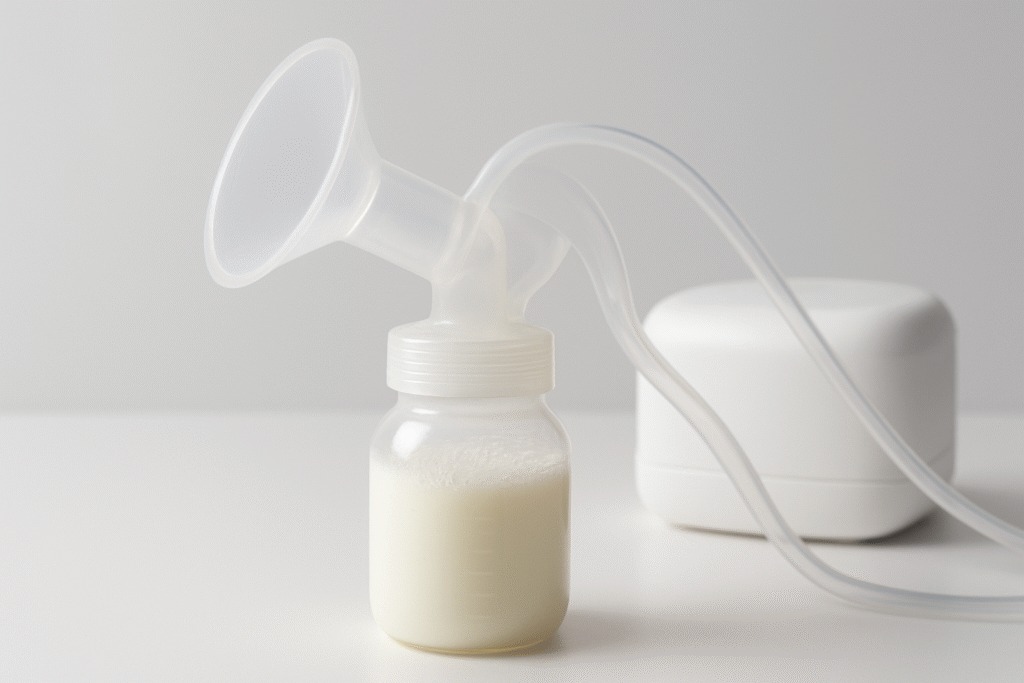
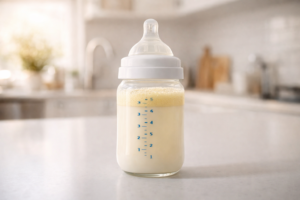
Many U.S. parents feel a moment of panic when they notice bubbles or foam sitting on top of freshly pumped breast milk. You may look at the bottle and immediately wonder, why is my breast milk foamy or frothy, and whether something is wrong with your body or your baby’s nutrition.
This concern is extremely common, especially among pumping parents. Breast milk is not a static liquid. It moves, flows, reacts to pressure, and responds to how it is collected. When air becomes trapped during this process, milk can appear foamy or frothy. While the visual change can feel alarming, it is usually harmless and easy to explain.
In this guide, we focus only on foamy and frothy breast milk. We will explain what causes it, when it is normal, when parents should pay attention, and how to reduce foam if desired. Everything is explained in a calm, science-based, and parent-friendly way for U.S. families in 2026.
Quick Takeaways for Busy Parents
- Foamy breast milk is usually caused by air mixing into the milk during pumping or milk movement.
- Frothy and foamy breast milk are commonly used to describe the same bubbly appearance.
- Foam does not mean the milk is unsafe or unhealthy for your baby.
- Pumping speed, suction level, and milk flow play a major role in foam formation.
- Most babies can drink foamy breast milk without any problem.
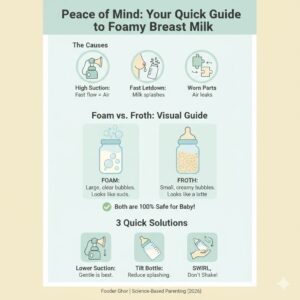
A quick visual summary of why breast milk foams and how to manage it:
What Does Foamy or Frothy Breast Milk Mean?
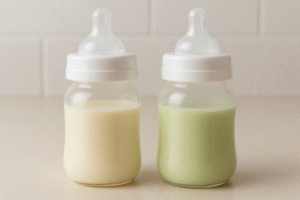
When parents ask why is my breast milk foamy, they are usually describing milk that has visible bubbles, airy foam, or a light froth sitting on top after pumping or transferring milk.
Foamy breast milk often has larger, visible bubbles that rise to the surface. Frothy breast milk may appear creamier with smaller bubbles spread throughout the top layer. In everyday parenting conversations, these two words are used interchangeably.
To help you distinguish between the two, here is a quick comparison:
| Feature | Foamy Breast Milk | Frothy Breast Milk |
| Appearance | Larger, visible bubbles on top. | Smaller, creamy micro-bubbles. |
| Common Cause | High pump suction or splashing. | Fast milk flow or shaking. |
| Texture | Looks like light soap suds. | Looks like a latte or milk foam. |
| Safety | 100% safe for your baby. | 100% safe for your baby. |
Both appearances simply mean air is trapped in the milk. This does not automatically indicate a problem with milk quality, nutrition, or safety. Breast milk naturally contains proteins that can hold air when milk moves quickly or is agitated. This is similar to how bubbles appear when water is poured forcefully into a glass. The milk itself remains the same.
👉 While foam is usually air-related, many parents also worry if their milk looks less rich than expected. If you are concerned about fat levels, see our guide on why is my breast milk not fatty to understand how fat content changes during expression.
Why Is My Breast Milk Foamy After Pumping?
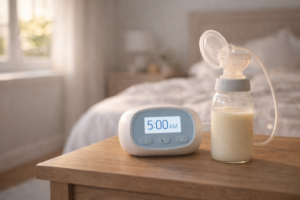
The most common reason breast milk becomes foamy is air introduction during pumping. Pumping equipment naturally moves milk through flanges, valves, and bottles. During this movement, air can mix with the milk.
Several pumping-related factors contribute to foam.
High Pump Suction or Speed
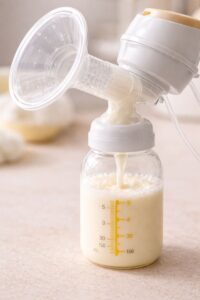
Using a high suction level can pull milk out very quickly. Rapid milk flow increases turbulence, which allows air to mix into the liquid. Many parents increase suction thinking it will improve output, but higher suction often leads to more foam rather than better milk removal.
Loose or Worn Pump Parts
If pump parts are not tightly sealed, small air leaks can occur. Even tiny gaps between flanges, valves, or bottles can introduce air into the milk stream. Worn membranes or duckbill valves are common causes of sudden foam that was not present before.
Milk Splashing Inside the Bottle
When milk drops directly into a pool of milk from a height, it can splash and trap air. This is especially common during strong letdown or when bottles are positioned straight downward.
Why Is My Breast Milk Frothy Instead of Smooth?
Frothy breast milk usually happens for the same reasons as foamy milk. Froth tends to appear when milk is moving rapidly or being agitated.
Common situations include:
Milk flowing forcefully during letdown
Milk swirling inside the bottle
Milk being transferred between containers
Milk being poured quickly from one bottle to another
Froth often settles on its own once the milk is left undisturbed for a few minutes. This is because air bubbles naturally rise and escape.
Why Do Pumping Parents Notice Foam More Often?
Foamy breast milk is far more common among parents who pump regularly. Direct breastfeeding rarely introduces enough air to create visible foam because milk flows directly from breast to baby.
Pumping equipment, however, moves milk mechanically. Parents who exclusively pump often notice foam more frequently because milk is handled multiple times before feeding. Each movement creates another opportunity for air to mix with the milk. This does not mean pumping is harmful or inferior. It simply means milk behaves differently when collected mechanically.
Is Foamy Breast Milk Safe for Babies?
Yes. In most cases, foamy or frothy breast milk is safe for babies. The foam itself is just air. It does not reduce nutrition, destroy antibodies, or make milk unsafe. According to the American Academy of Pediatrics (AAP), expressed milk appearance can vary, but as long as safety guidelines are met, it remains the gold standard for infant nutrition.
Most babies drink foamy milk without noticing any difference at all. The milk still contains the same calories, fats, proteins, and immune-supporting components.
👉 According to U.S. food safety and infant feeding standards, breast milk quality is not affected by air bubbles alone when milk is handled hygienically and stored correctly.
Can Foamy Breast Milk Upset a Baby’s Stomach?
In some cases, babies who are sensitive to air may swallow extra air while feeding from a bottle that contains a lot of foam. This can sometimes lead to:
Gassiness
More frequent burping
Temporary fussiness
This does not mean the milk is bad. It simply means reducing foam may help babies who are extra sensitive. Letting milk rest for a few minutes before feeding allows bubbles to rise and disappear naturally.
Why Is My Breast Milk Foamy at the Top of the Bottle?
Many parents notice foam sitting only at the top of the bottle. This happens because air bubbles naturally rise upward after pumping stops.
Foam on top does not mean separation or spoilage. It is simply the point where trapped air collects. Once the bottle sits undisturbed, some foam may reduce on its own.
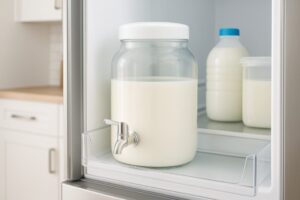
A common question among parents is why is my breast milk foamy or frothy in the fridge. When pumped milk sits in the refrigerator, any air bubbles trapped during pumping naturally rise and collect at the top as the milk settles. If you notice breast milk foamy in the fridge, it does not mean spoilage. The cold environment simply makes those air bubbles more visible.
How to Reduce Foam in Pumped Breast Milk?
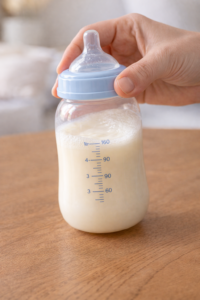
If foam bothers you or your baby seems uncomfortable, there are gentle ways to reduce it. None of these steps are required for safety, but they may improve feeding comfort.
Lower the Pump Suction
Using the lowest effective suction level reduces turbulence. Comfortable pumping often results in smoother milk flow than aggressive suction.
👉 Maintaining a proper pumping routine is essential for milk quality and flow. If you are looking for a proven schedule to follow, check out our breakdown of What Is the 555 Rule for Pumping to improve your daily sessions.
Check Pump Assembly Regularly
Ensure all pump parts are securely attached. Inspect valves, membranes, and connectors for wear. Replacing worn parts often reduces air leaks immediately.
Tilt the Bottle Slightly During Pumping
Allowing milk to slide down the side of the bottle instead of splashing straight down can reduce bubble formation.
Let Milk Settle Before Feeding
Allowing pumped milk to rest for a few minutes lets bubbles rise and dissipate. If you’re letting it settle at room temperature, make sure you know exactly how long can breast milk sit out to maintain its freshness and safety.
Understanding why is my breast milk foamy after shaking is also important. Vigorous shaking agitates the milk and traps a large amount of air, similar to whisking a liquid, which creates visible foam. This is why lactation experts recommend gently swirling instead of shaking. Gentle handling helps keep the milk smooth and reduces excess air during feeding.
Does Foamy Breast Milk Mean Something Is Wrong With Lactation?
No. Foamy breast milk does not indicate a problem with milk production, hormones, or breastfeeding ability. Parents sometimes worry that foam means something is wrong internally. In reality, foam is a mechanical effect, not a biological failure. Your body is still producing appropriate milk for your baby.
Emotional Side of Seeing Foamy Breast Milk
Many parents describe feeling anxious or discouraged when they first notice foam. Common thoughts include:
Am I doing something wrong?
Is my milk good enough?
Will my baby get enough nutrition?
These feelings are valid. Feeding a baby carries emotional weight. Visual changes in milk can easily trigger worry, especially during pumping at night or at work. Reassurance matters. Foamy milk alone is not a sign of poor parenting or poor milk quality.
Parent Experience From Online Communities
In U.S. parenting forums, many pumping parents share similar experiences. One mother explained that she noticed foam every time she pumped at work but rarely at home. After lowering suction and replacing worn valves, the foam reduced significantly.
Another parent shared that letting milk sit before feeding helped reduce baby gas without changing milk supply. Stories like these highlight how common foamy breast milk is and how simple adjustments often solve concerns.
When Should Parents Pay Attention?
Foamy breast milk by itself is not a medical concern. Parents may want to observe feeding patterns if:
- Baby seems consistently uncomfortable after bottle feeds
- Excessive gas occurs with every feeding
- Foam appears suddenly after pump changes
In these situations, reviewing pumping technique or speaking with a lactation consultant may be helpful.
What Foamy Breast Milk Is Not?
Foamy breast milk does not automatically mean:
- Milk is spoiled
- Milk is unsafe
- Milk lacks nutrition
- Milk should be discarded
Understanding what foam does not mean is just as important as knowing what causes it.
Food Safety and Breast Milk Handling
According to U.S. health authorities like the Centers for Disease Control and Prevention (CDC) and Food and Drug Administration (FDA), proper milk handling is essential for safety. Foam alone does not violate safety guidelines when milk is stored, handled, and fed properly. Parents should continue following recommended storage times, clean pumping practices, and safe feeding routines.
👉 Pro-Tip: Sometimes gently warming the milk can also help the foam settle faster. To do this safely without damaging the nutrients, follow our guide on how to warm breast milk correctly.
Common Frequently Asked Questions About Foamy Breast Milk
A: This usually happens due to air mixing during pumping. High suction, fast flow, or loose pump parts are common causes.
A: In everyday parenting language, frothy and foamy usually describe the same bubbly appearance caused by air.
A: No. Foamy breast milk is generally safe to feed and does not need to be discarded.
A: No. Foam does not change the nutritional value of breast milk.
A: Yes. Adjusting pump suction, checking pump parts, and letting milk settle can reduce foam.
A: No. Foam is related to air, not milk quality.
A: The first milk flows fast and can trap air, causing foam. This is normal and settles as pumping continues.
A: Aggressive or frequent pumping can trap more air, creating foam. It does not affect milk quality.
A: It can. If a baby swallows a lot of the air bubbles from the foam, they might need to burp more frequently or feel slightly gassy.
A: Absolutely not. It contains all the same nutrients and antibodies as non-foamy milk.
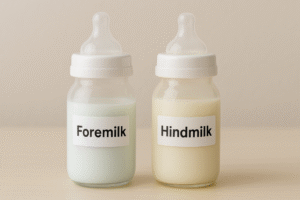
A: No. Foam is just air bubbles. Foremilk and hindmilk differ in fat, not foam.
A: High suction or fast cycles can cause froth; use medium settings.
A: Bubbles reflect light differently, making foam look a different shade. This is an optical effect, not a change in milk tint. 👉Learn more in our post on Breast Milk Color.
Why Trust Fooder Ghor?
At Fooder Ghor, we understand how stressful feeding questions can feel for U.S. parents in 2026. Every guide is written using trusted CDC, FDA, and USDA safety principles and reviewed for clarity and accuracy. Our goal is not to scare parents, but to provide calm, evidence-based reassurance so families can feed their babies with confidence.
Conclusion
If you have ever looked at a bottle and wondered why is my breast milk foamy or frothy, you are not alone. This is one of the most common concerns among pumping parents.
Foamy breast milk is usually caused by air mixing during pumping and milk movement. It is normal, safe, and manageable. With small adjustments, many parents reduce foam easily. Even without changes, most babies tolerate foamy milk just fine.
Understanding what foam means and what it does not mean allows parents to move forward with confidence, clarity, and peace of mind.