Skip to content
For many U.S. parents, choosing how to store expressed breast milk is no longer just about convenience. Safety, long-term health, and chemical exposure are now major concerns. As awareness grows around microplastics and chemical leaching, more parents are actively searching for non-plastic breast milk storage options that keep milk as pure as possible.
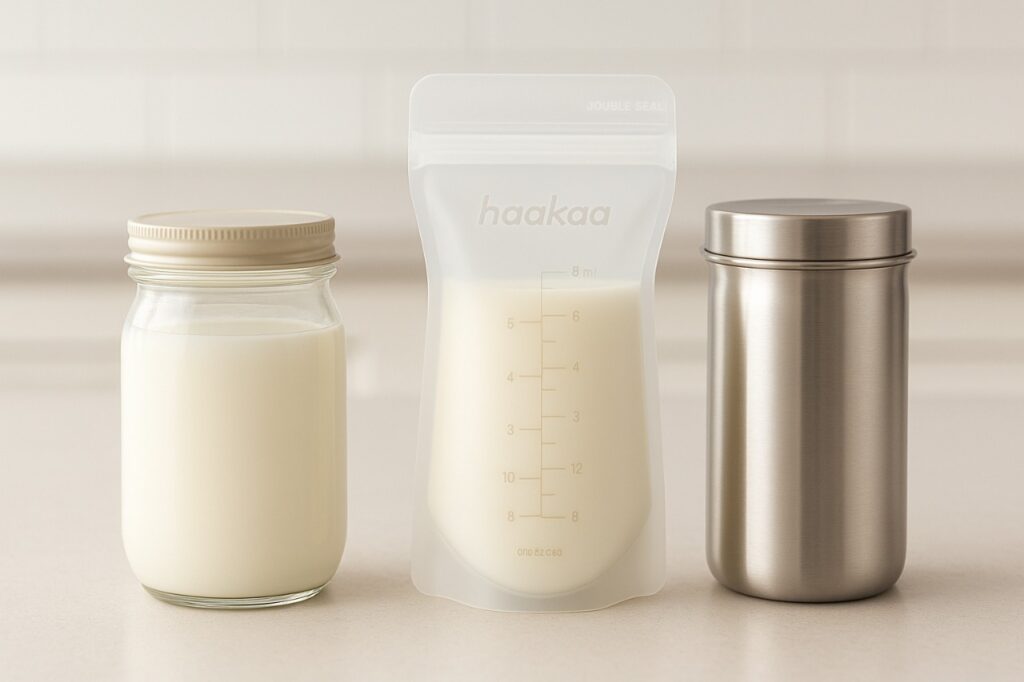
Even BPA-free plastics can release microscopic plastic particles or chemical residues when exposed to repeated freezing, thawing, and warming. Over time, these exposures may affect milk quality. This is why glass jars, silicone storage bags, and stainless steel containers are becoming the preferred alternatives for safe, non-toxic breast milk storage.
What You Will Learn in This Guide
- The safest non-plastic breast milk storage options available in the U.S.
- Which materials work best for freezer storage and daily use
- How to avoid microplastics in breast milk completely
- Practical safety tips for glass, silicone, and steel containers
Why Go Non-Plastic for Breast Milk Storage?
Breast milk is biologically active. It contains antibodies, enzymes, and living cells that help protect your baby’s immune system. When milk is stored in plastic containers, especially during freezing and reheating cycles, there is a risk of microplastic transfer and chemical breakdown.
Choosing non-toxic breast milk storage materials helps:
- Preserve milk purity
- Reduce exposure to microplastics
- Improve long-term storage safety
- Minimize environmental waste
The American Academy of Pediatrics emphasizes careful container selection when storing infant milk to reduce unnecessary chemical exposure. You can review official guidance here: AAP Safe Breast Milk Storage Recommendations (aap.org).
How to Avoid Microplastics in Breast Milk?
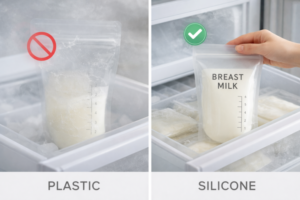
Avoiding microplastics starts with eliminating plastic contact at every stage of milk handling.
How to Store Breast Milk Without Using Plastic?
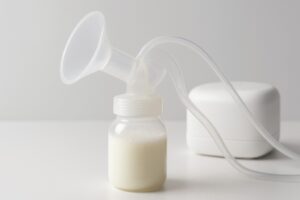
- Use glass, silicone, or stainless steel containers for pumping, storing, and freezing
- Avoid disposable plastic storage bags entirely
- Do not warm milk in plastic containers
- Transfer milk only between non-plastic materials
When every contact point is non-plastic, the risk of microplastic contamination becomes essentially zero.
What Breast Milk Storage Bags Are Not Plastic?
Parents often ask: What breast milk storage bags are not plastic?
The only true non-plastic option currently available is food-grade silicone breast milk storage bags.
Non-Toxic Silicone Breast Milk Storage Bags
- Made from medical or food-grade silicone
- Heat-resistant and freezer-safe
- Reusable hundreds of times
- Free from BPA, phthalates, and microplastics
Unlike disposable plastic bags, silicone bags do not crack, tear, or release particles during freezing.
Best Non-Plastic Breast Milk Storage Options for Freezer Use
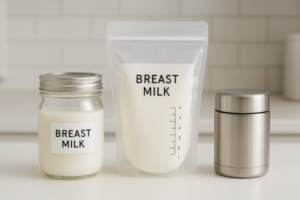
Choosing the right container depends on how you plan to store, freeze, and rotate milk.
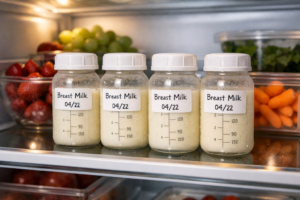
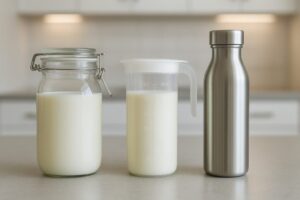
1. Glass Jars: The Purest Storage Option
Glass is completely inert, meaning it does not react with breast milk.
Pros
- Zero chemical leaching
- Excellent for long-term freezer storage
- Easy to sterilize
Cons
- Heavy and breakable
- Requires headspace for freezing expansion
Tip: Leave at least one inch of space at the top before freezing to prevent cracking.
👉 If you prefer glass bottles, check out our guide on Best Glass Bottle Choices For Milk Storage.
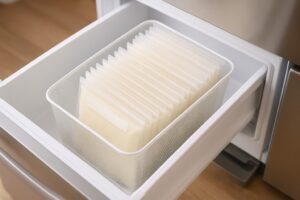
2. Silicone Storage Bags: Flexible and Space-Saving
Silicone bags are ideal for parents who need freezer efficiency.
Pros
- Freeze flat to save space
- Durable and leak-resistant
- Non-toxic and reusable
Cons
- Higher upfront cost
- Requires thorough cleaning and drying
These bags are especially useful for parents building a freezer stash with limited space.
👉 For additional freezer organization ideas, explore our related guide on How to Organize Breast Milk in Freezer? (Flat-Freezing & FIFO Guide).
3. Stainless Steel Containers: Durable and Travel-Friendly
Stainless steel offers unmatched durability.
Pros
- Shatterproof and lightweight
- Resistant to stains and odors
- Cools milk quickly
Cons
- You cannot see milk quantity without opening
Food-grade stainless steel (18/8 or 304) is completely safe for infant milk storage.
👉 For parents who want to see all container options including plastic alternatives, you can explore more container options Breast Milk Storage Containers.
Non-Plastic Feeding Bottles: Extending Safety Beyond Storage
Many parents who eliminate plastic storage also prefer non-plastic feeding bottles.
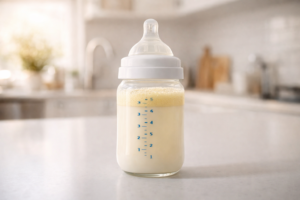
- Glass bottles offer purity but require careful handling
- Silicone bottles provide flexibility without chemicals
- Stainless steel bottles are ideal for travel and older babies
Using non-plastic bottles ensures milk stays plastic-free from storage to feeding.
👉 You can also learn proper handling and temperature control in our full guide on Safe Milk Storage Practices.
Common Mistakes in Non-Plastic Breast Milk Storage
Even with safe materials, mistakes can reduce safety.
- Overfilling glass jars before freezing
- Rapid temperature changes with glass containers
- Inadequate sterilization of reusable silicone bags
- Poor labeling leading to FIFO errors
Safety and Material Standards to Check
When purchasing non-plastic containers, always confirm:
- FDA food-contact approval
- Medical or food-grade silicone certification
- Stainless steel grade (18/8 or 304)
👉 You can review official material safety standards here: FDA Food-Safe Materials Guidelines (fda.gov).
FAQ: Choosing Safe Non-Plastic Storage
Q: What is the best non-plastic storage for breast milk?
A: Glass jars offer the highest purity, silicone bags offer flexibility, and stainless steel provides durability. The best option depends on your storage habits.
Q: Is silicone completely safe for breast milk storage?
A: Yes. High-quality food-grade silicone is non-toxic, heat-resistant, and microplastic-free.
Q: Can I freeze breast milk in glass jars?
A: Yes, as long as you leave proper headspace for expansion.
Q: Is stainless steel safe for infants?
A: Absolutely. Food-grade stainless steel does not leach chemicals and is extremely durable.
Q: Are silicone breast milk storage bags leak-proof when thawed?
A: High-quality silicone breast milk bags are highly leak-proof because they use a secure zip-top or specialised seal. They are much less prone to the tearing and pinhole leaks common with plastic bags.
Conclusion: A Safer, Plastic-Free Choice for Your Baby
Switching to non-plastic breast milk storage is one of the most effective ways to protect milk purity and reduce unnecessary chemical exposure.
Glass jars, silicone storage bags, and stainless steel containers each serve different needs, but all provide a safer alternative to plastic. By choosing non-toxic materials and following proper storage practices, you ensure your baby receives milk exactly as nature intended.
By investing in non-plastic solutions, you’re choosing both safety and sustainability, ensuring your baby’s milk stays pure and the planet stays clean.
👉 If you’re new to safe container choices, check our detailed guide: Best Milk Storage Containers: Glass vs. Plastic vs. Metal (Ultimate USA Buying Guide).