Skip to content

Introduction: Clearing the Air for Parents
Many U.S. parents believe goat milk is lactose-free and therefore safer for sensitive stomachs. This idea spreads quickly through parenting forums, social media, and word of mouth. But is it actually true?
The short answer is no. Goat milk is not lactose-free. However, it is digested differently than cow milk, which explains why many people feel more comfortable drinking it. In this guide, we will clearly explain whether goat milk contains lactose, how it compares to other milks, and why its unique structure makes it a popular choice for families.
Quick Summary: Goat Milk Lactose at a Glance
If you are short on time, here are the most important takeaways:
-
Lactose Presence: It contains natural milk sugar (lactose).
-
Comparison: It has roughly 9% less lactose than standard cow milk.
-
Digestibility: Smaller fat globules and a softer curd make it easier on the stomach.
-
Medical Note: It is not safe for individuals with diagnosed lactose intolerance.
-
Fermentation: Products like goat milk kefir have significantly lower lactose levels.
Does Goat Milk Have Lactose? The Direct Answer
No. It is not a lactose-free dairy product. This milk naturally contains lactose, just like cow milk and human milk. On average, goat milk contains about 4.1 to 4.5 grams of lactose per 100 ml. While this is lower than the ~4.7 to 5.0 grams found in cow milk, it is still a significant amount of milk sugar.
So, if you are asking:
-
Is goat milk lactose free? The answer is no.
-
Does it contain this milk sugar? Yes, it does.
For individuals with severe lactose intolerance, even this slightly lower amount can trigger symptoms like bloating, gas, or diarrhea.
What Is Goat Milk Lactose? (A Biological Perspective)
Lactose in goat milk is the same natural disaccharide found in all mammalian milk. It is composed of two simple sugars: glucose and galactose.
Biologically, lactose serves a critical purpose. It provides a steady source of energy for growing kids (and human babies) and plays a vital role in helping the body absorb essential minerals like calcium and magnesium. While the lactose molecule itself is chemically identical across different species, the “delivery system” meaning the proteins and fats it is packaged with—varies greatly between goats and cows.
Why Many People Think Goat Milk Is Lactose Free ?(Debunking the Myth)
Many people search phrases like “why does goat’s milk not have lactose.” This belief stems from personal experience rather than chemistry. Because many people feel better after switching from cow milk to goat milk, they assume the lactose must be missing.
Here is the scientific reason behind this “easy digestion” feeling:
-
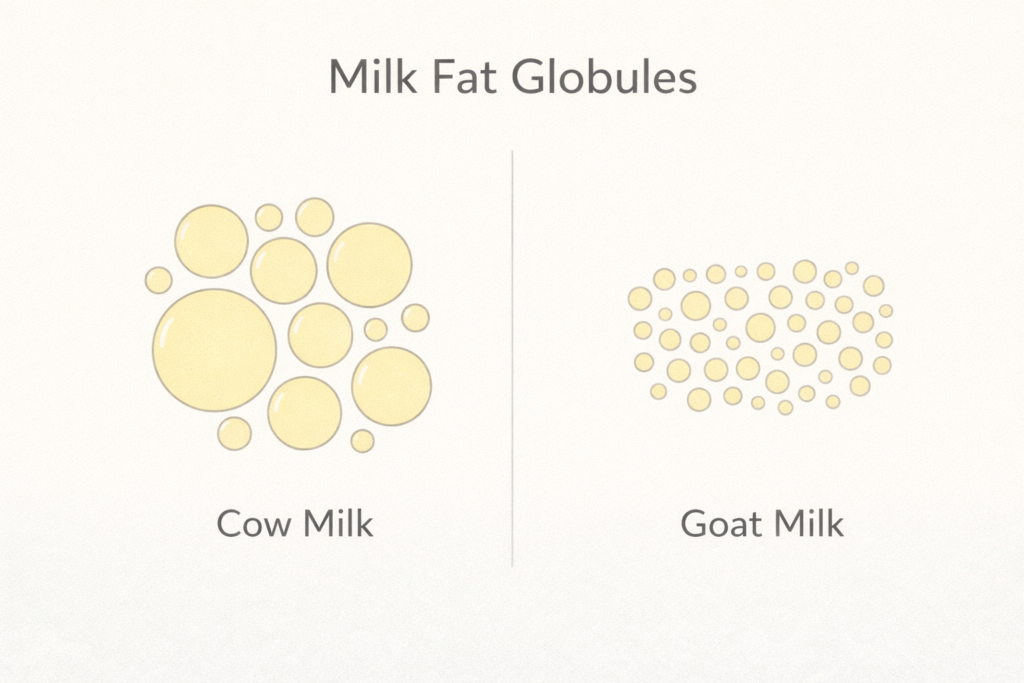
Smaller Fat Globules: Goat milk fat particles are about 20% smaller than those in cow milk, providing a larger surface area for digestive enzymes to work.
-
Softer Casein Curd: When goat milk hits the stomach, it forms a much softer and looser “curd” compared to the tough curd of cow milk. This allows it to pass through the digestive tract with less effort.
-
Rapid Gastric Emptying: Because of its structure, goat milk leaves the stomach faster, reducing the time lactose sits in the gut causing potential fermentation and gas.
This is similar to how many parents ask whether breast milk contains lactose, which it absolutely does. If you want a deeper explanation, our guide on does breast milk have lactose? explains this clearly.
Goat Milk: Lactose vs. Casein — Knowing the Difference
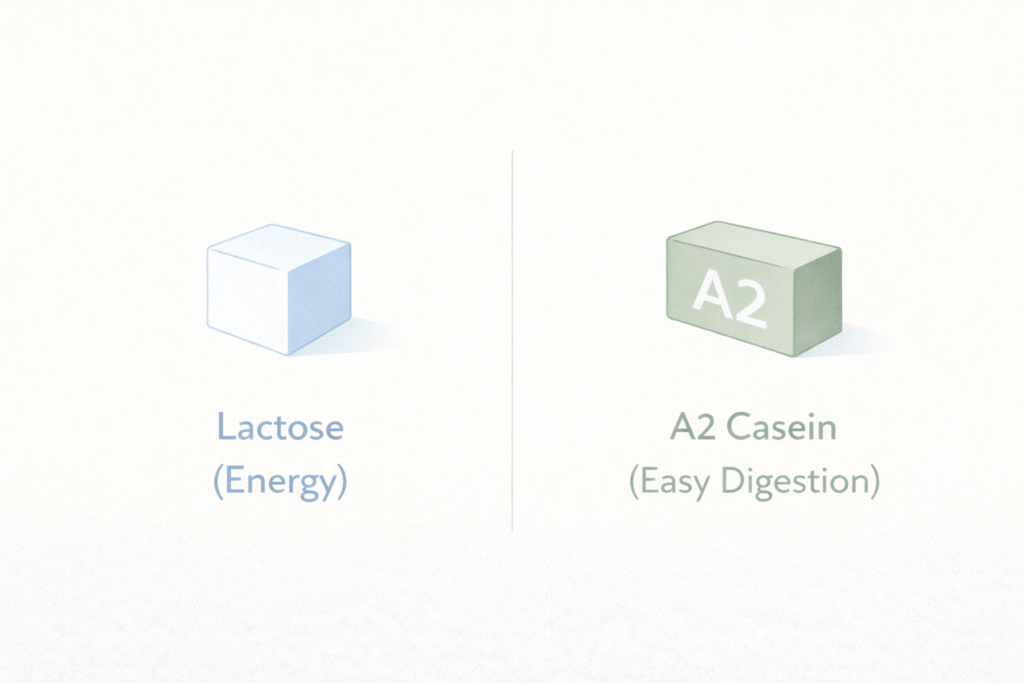
A common source of confusion is whether the digestive upset is caused by milk sugar (lactose) or milk protein (casein). Does goat milk have lactose or casein? The answer is both.
-
Lactose is a Carbohydrate (Sugar): Most people associate gas and bloating with lactose.
-
Casein is a Protein: Many “digestive issues” are actually mild sensitivities to the A1 beta-casein protein found in most commercial cow milk.
Goat milk is naturally A2-type milk, meaning it lacks the inflammatory A1 protein. For many parents, what they think is “lactose intolerance” is actually an “A1 protein sensitivity.” This is why goat milk feels better, even though the lactose is still present.
Does Goat Milk Have Less Lactose Than Other Dairy?
Yes, but the difference is subtle. Below is a comparison of common milk types used in the U.S.
| Type of Milk | Approx. Lactose Content (per 100ml) | Main Digestibility Factor |
| Human Breast Milk | ~7.0 g | Highest lactose for brain growth |
| Goat Milk | ~4.1 g | A2 protein & small fat globules |
| Cow Milk | ~4.7 g | Standard A1 protein structure |
| Sheep Milk | ~4.6 g | High fat and protein density |
While goat milk has less lactose than cow milk, it is important to note that it has significantly less than human milk. Our detailed guide on what is breast milk lactose? explains why human milk sugar is uniquely high to support a baby’s rapid brain development.
Based on nutritional data from the USDA Food Data Central, goat milk contains approximately 4.1% to 4.5% lactose. While this is slightly lower than the lactose content found in standard cow milk, it confirms that goat milk is not a lactose-free dairy option.
Lactose in Processed Goat Dairy: Kefir, Yogurt, and Powders
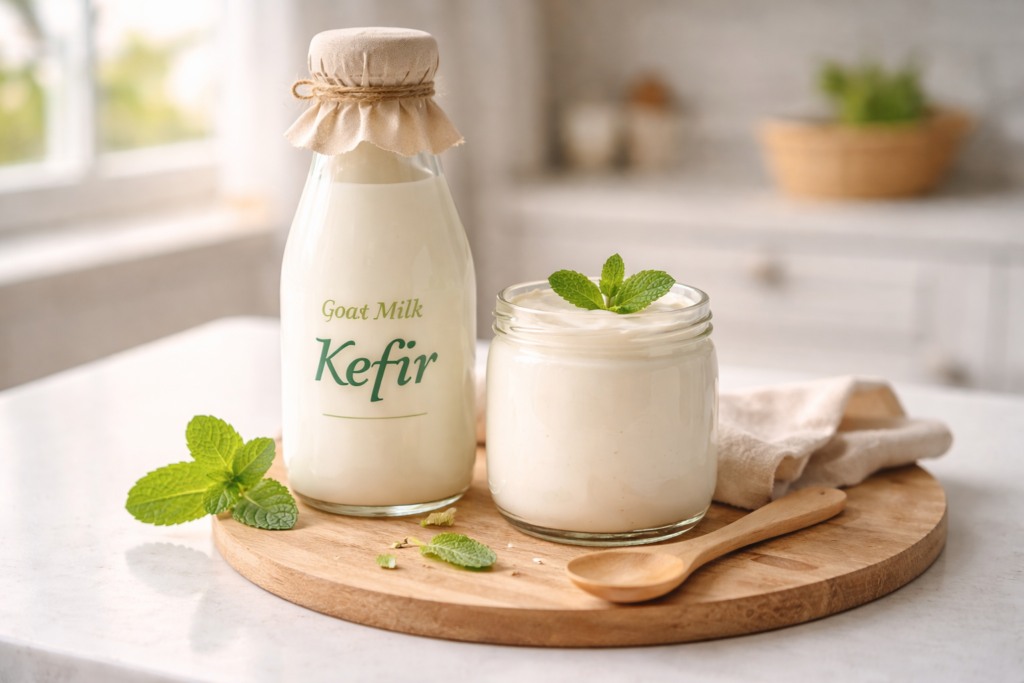
The way goat milk is processed can drastically change its lactose levels.
-
Goat Milk Yogurt: During the culturing process, beneficial bacteria (probiotics) consume a large portion of the lactose, turning it into lactic acid. This makes yogurt much lower in lactose than plain milk.
-
Goat Milk Kefir: Since kefir is fermented longer and with a wider variety of bacteria and yeasts, it is often 99% lactose-free.
-
Goat Milk Formula/Powders: For products like Petag Esbilac puppy powder, lactose is usually present to mimic natural milk. Always check the label if you are looking for “lactose-reduced” versions.
🚨 A Note on Infant Safety & Nutrition According to U.S. CDC recommendations, milk alternatives such as goat milk should be introduced only after age 12 months and always in the context of balanced nutrition and safety guidance. For infants under one year, breast milk or iron-fortified formula remains the only recommended primary source of nutrition.
The Role of Raw Goat Milk and Safety
Some parents look toward raw goat milk, believing the natural enzymes help break down lactose. However, according to the USDA and CDC, raw milk poses significant safety risks due to potential bacterial contamination. It is always recommended to use pasteurized goat milk products, especially for children.
Why Trust Fooder Ghor?
At Fooder Ghor, we provide educational resources focused on understanding the safe use, handling, and storage of different types of milk, including breast milk, cow’s milk, goat milk, and raw milk, based on publicly available guidance from trusted sources such as the CDC, FDA, USDA, and AAP. Some milk-related articles, particularly those involving maternal and infant feeding topics, are reviewed for clarity and presentation by nursing students with academic training in maternal and child health to help make information easier to understand. This content is provided for learning purposes only and does not offer medical advice.
Frequently Asked Questions
Chemically, no. The lactose molecule (a combination of glucose and galactose) is identical in both milks. The difference lies in the surrounding “matrix”—the fat and protein structure of goat milk—which changes how your body interacts with that lactose during digestion.
Lactose levels are generally stable, but they can fluctuate slightly based on the goat’s lactation cycle. Usually, lactose is highest in the early stages of lactation and may decrease slightly as the season progresses, though the change is minimal for the average consumer.
No. Lactose is a milk sugar found in the watery part (whey) of the milk, not in the fat. When fat is removed to make skimmed goat milk, the lactose remains in the liquid, so the lactose content per cup stays roughly the same.
The color has nothing to do with lactose or sugar. Goat milk is whiter because goats are efficient at converting yellow beta-carotene from their diet into colorless Vitamin A. The lactose content doesn’t affect the visual appearance of the milk.
Since goat milk has slightly less lactose (~9% less), it isn’t necessarily sweeter. However, because goat milk is naturally homogenized with smaller fat globules, some people perceive the flavor as “creamier” or “richer,” which can sometimes be mistaken for sweetness.
Without using commercial lactase enzymes or long-term fermentation (which we discuss in our dairy guides), you cannot remove lactose from fresh goat milk at home. Standard kitchen practices like heating, stirring, or straining do not change the lactose molecules.
Why Trust Fooer Ghor?
Conclusion:
This type of dairy is not lactose-free. It is not a magic solution for those with severe allergies or diagnosed intolerance. However, its unique combination of slightly lower lactose, smaller fat globules, and A2 protein makes it a significantly gentler option for many.
Understanding the difference between lactose content and digestibility is the key to making an informed choice for your family’s nutrition.