Skip to content

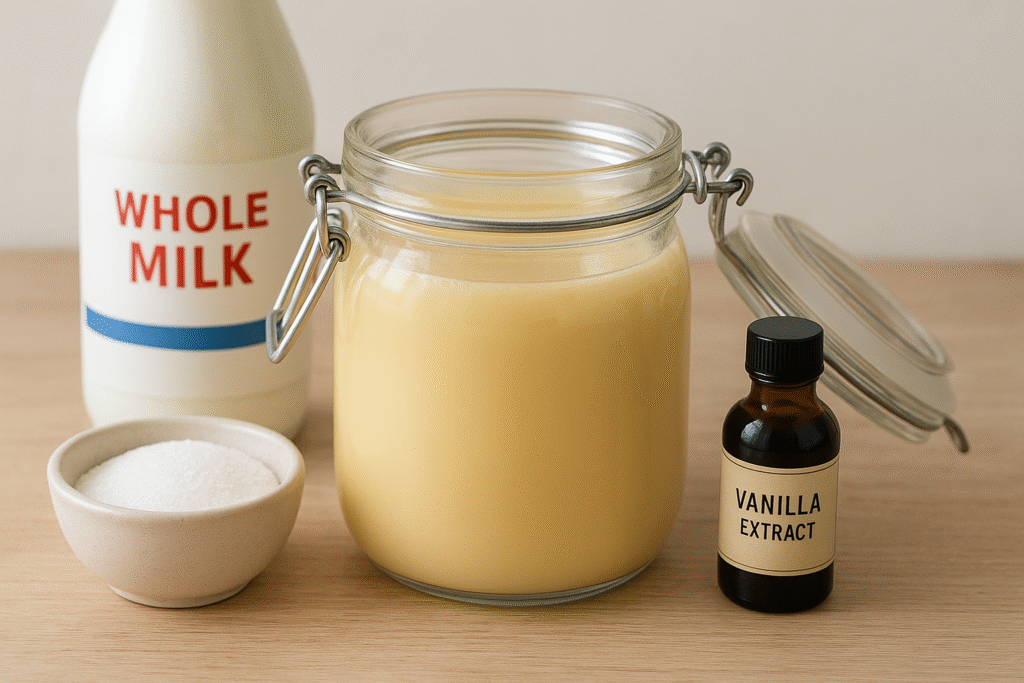
Making pantry staples at home is both rewarding and practical. If you’ve ever wondered how do you make condensed milk, you’ll be pleased to know it’s surprisingly easy. With just milk, sugar, and gentle heat, you can create a rich, sweetened condensed milk perfect for baking, desserts, and family favorites. In this guide, we’ll walk you through a classic recipe, the essential ingredients and tools, and expert tips to ensure your homemade condensed milk turns out perfectly every time.
What You Need: Simple Ingredients for the Homemade Version
- Whole Milk – Provides the best richness. Its fat content helps create a thick, creamy texture.
- Granulated Sugar – The sweetener that also aids in preservation.
- Vanilla Extract (Optional) – Adds a subtle flavor but is optional.
Essential Tools
- Heavy-bottomed saucepan
- Whisk
- Timer
- Airtight storage container
Using the right tools ensures even heating and prevents scorching, which is crucial for smoothing this milk.
How to Make Condensed Milk at Home (The Full Recipe Guide)
Step 1: Combine and Heat
Pour milk and sugar into the saucepan. Heat gently over medium-low heat while stirring until the sugar dissolves completely. This step prevents graininess in your final product.
Step 2: Bring to a Simmer
Increase the heat until the mixture reaches a gentle simmer. Never allow it to reach a rolling boil—it will scorch easily and ruin the flavor.
Step 3: The Reduction Process (Patience is Key)

Reduce the heat to low. Let the mixture simmer gently for 45–60 minutes, stirring frequently. Reduce the volume by roughly half (e.g., from 4 cups to 2 cups) to create a thick, creamy consistency.
Step 4: Cool and Store
Remove from heat. Stir in vanilla extract if using, and allow the mixture to cool completely. Transfer to an airtight jar for storage.
👉 For freezing guidance and extra storage tips, check Can You Freeze Sweetened Condensed Milk.
Variations: Can You Make Unsweetened Condensed Milk (Evaporated Milk)?
To make a sugar-free version, follow the same steps but omit the sugar. This produces evaporated milk, suitable for savory dishes or for those avoiding added sugar.
Quick Storage Tip
Store homemade condensed milk in an airtight container in the refrigerator. It stays fresh for about 1–2 weeks.
👉 For a detailed guide on shelf life and freezing safety, read our post on how long does sweetened condensed milk lasts.
👉 For additional safety and storage tips, parents can visit the trusted resuorce USDA Food Safety and Inspection Service.
Perfect Ways to Use Your Homemade Condensed Milk

Homemade condensed milk is versatile and delicious. Try it in:
- Fudge and caramel sauces
- Key lime pie and other desserts
- Coffee creamer for a sweet, creamy touch
- Ice cream and frozen treats
Making it at home gives you both satisfaction and control over ingredients, ensuring your family enjoys wholesome results.
Why Trust Fooder Ghor?
At Fooder Ghor, we provide educational resources focused on understanding the safe use, handling, and storage of different types of milk, including breast milk, cow’s milk, goat milk, and raw milk, based on publicly available guidance from trusted sources such as the CDC, FDA, USDA, and AAP. Some milk-related articles, particularly those involving maternal and infant feeding topics, are reviewed for clarity and presentation by nursing students with academic training in maternal and child health to help make information easier to understand. This content is provided for learning purposes only and does not offer medical advice.
Common Frequently Asked Questions About Condensed Milk
Q: Can I make this milk without sugar?
A: Yes, omitting sugar results in evaporated milk, perfect for savory recipes or sugar-free dishes.
Q: How long does homemade condensed milk last?
A: When stored in an airtight container in the fridge, it stays fresh for 1–2 weeks.
Q: Can I use non-dairy milk?
A: You can try with plant-based milk, but the texture and sweetness may differ from traditional condensed milk.
Q: Is it necessary to stir constantly?
A: Frequent stirring prevents scorching and ensures a smooth, creamy consistency.
Q: Can I freeze homemade condensed milk?
A: Yes, transfer to a freezer-safe container. Use within 3 months. Stir well after thawing.
Q: Can this milk be used immediately after cooling?
A: Yes, but it thickens more as it cools. Stir before using in recipes for best results.
Conclusion
Making sweetened condensed milk at home is simple, cost-effective, and gives you complete control over ingredients. By following these steps, parents and caregivers can create a creamy, versatile staple for desserts, coffee, and more. This easy 3-ingredient recipe proves that homemade pantry essentials can be both practical and delicious.
👉 For additional guidance on dairy handling and home food safety, check the CDC Food Safety Resources.