Skip to content


Cow milk is one of the most common dairy products used in homes across the world. Families use it daily for drinking, cooking, baking, cereal, coffee, and child nutrition. Even though it is familiar, many people still ask basic questions about what cow milk actually is, what it contains, how it tastes, and what its natural color should look like.
In simple terms, cow milk is a nutrient-rich liquid naturally produced by female cows to feed their calves. After collection and processing, it becomes the milk commonly sold in grocery stores.
This guide explains what cow milk is, what it is made of, what it tastes like, and other beginner questions families often ask.
Quick Takeaways
- Cow milk is a natural dairy liquid produced by female cows.
- It contains water, protein, fat, lactose, vitamins, and minerals.
- Store-bought milk is usually pasteurized for safety.
- Cow milk usually tastes mildly sweet and creamy.
- Fresh milk is typically white or slightly creamy in color.
What Is Cow Milk? (Understanding Varieties and Uses)
Cow milk (often searched as cows milk) is a natural dairy liquid produced by female cows and later collected for human consumption. It is one of the most widely consumed animal-based dairy products globally.
Families commonly use cow milk for:
-
Drinking, Cooking, and Baking
-
Coffee, Cereal, and Dairy recipes
Common Varieties of Cows Milk
In the U.S., you will find several varieties of cows milk in stores, mainly differing in fat content:
-
Whole milk: Full fat content (around 3.25%).
-
Reduced-fat milk (2%): Lower fat for a lighter taste.
-
Low-fat milk (1%): Even less fat.
-
Fat-free milk: Often called skim milk.
According to the FDA, whether it’s whole or fat-free, pasteurization is essential to ensure the milk is safe from harmful bacteria.
What Is in Cow Milk? (Key Nutrients)
Cow milk is highly valued because it naturally contains a wide range of essential vitamins and minerals. These nutrients are part of why milk is commonly used in everyday diets.
The primary nutritional components include:
-
Calcium & Phosphorus: Essential for bone health.
-
Potassium: Helps maintain healthy blood pressure.
-
Vitamin D: Often added to improve calcium absorption.
-
Vitamin B12: Important for red blood cells and nerve function.
If families plan to store milk for longer periods, it is also useful to understand practical storage methods such as can you freeze cow milk safely for later use.
Basic Cow Milk Composition
| Component | Found in Cow Milk |
|---|---|
| Water | Yes |
| Fat | Yes |
| Protein | Yes |
| Lactose | Yes |
| Calcium | Yes |
| Vitamins | Yes |
According to the United States Department of Agriculture, milk naturally provides several nutrients commonly included in balanced diets.
What Is Cow Milk Made Of? (The Science)
While milk looks like a simple white liquid, its internal structure is quite complex. From a scientific perspective, cow milk is an emulsion of fat and protein in water.
It is primarily made of:
-
Water (about 87%): The base liquid that holds all other nutrients.
-
Proteins (Casein & Whey): Casein provides the white color, while whey is a high-quality liquid protein.
-
Lactose: The natural sugar that gives milk its mild sweetness.
-
Milk Fat: Provides energy, richness, and the creamy texture we love.
If you want to understand that process better, you may also explore do cows have to be pregnant to produce milk.
What Does Cow Milk Taste Like?

Cow milk usually tastes mild, slightly sweet, creamy, and smooth.
Taste can vary depending on:
- Fat percentage
- Freshness
- Processing
- Storage conditions
Whole milk usually tastes richer.
Lower-fat milk often tastes lighter.
Since milk taste and richness are closely related to how much milk a cow produces and its composition, many readers also become curious about production levels. You may also find it interesting to learn how much milk does a cow produce a day.
Cow Milk Taste Comparison
| Milk Type | Common Taste |
|---|---|
| Whole milk | Rich and creamy |
| 2% milk | Balanced |
| Skim milk | Lighter and thinner |
What Does Highland Cow Milk Taste Like?
Highland cow milk is often described as richer and creamier than standard commercial milk.
This may be influenced by differences in milk fat and overall milk composition.
Taste can vary based on:
- Feed quality
- Farming practices
- Freshness
This milk is less common in regular grocery markets.
What Does Milk Straight From a Cow Taste Like?
Milk directly from a cow often tastes fresher, creamier, and fuller than standard store-bought milk.
This happens because fresh milk has not yet gone through common processing methods such as:
- Pasteurization
- Homogenization
Fresh raw milk may taste:
- Richer
- More natural
- Slightly sweeter or grass-influenced depending on feed
If you want a more detailed breakdown of raw milk flavor and freshness differences, you may also find our article on what does raw cow milk taste like helpful.
What Is the Color of Cow Milk?
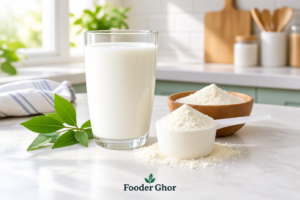
Fresh cow milk is usually white or slightly creamy white.
Its exact shade may vary depending on:
- Fat level
- Breed
- Feed
- Processing
Whole milk often appears slightly creamier than skim milk.
Natural variation in shade is usually normal.
Cow Milk Color Guide
| Milk Condition | Common Color |
|---|---|
| Fresh milk | White or creamy white |
| Whole milk | Slight cream tint |
| Skim milk | Bright white |
What Color Is Cows Milk When Old?
Older milk may begin showing visible changes as freshness declines.
As milk ages, it may appear:
- Yellowish
- Dull
- Slightly darker
- More separated
Color alone does not confirm spoilage.
More common spoilage signs include:
- Sour smell
- Curdling
- Thick texture
If you store milk regularly, you may also want to learn how long fresh cow milk lasts under different storage conditions.
What Is Milk Fever in a Cow?
Many people confuse “Milk Fever” with milk quality, but it is actually a metabolic health condition in cows, typically occurring around calving. It is caused by a sudden drop in the cow’s blood calcium levels.
-
Is the milk affected? No, this is a veterinary issue for the animal, not a storage or safety issue for the milk you buy.
-
Signs in cows: Weakness, muscle tremors, or inability to stand.
Why Trust Fooder Ghor?
At Fooder Ghor, we provide educational resources focused on understanding the safe use, handling, and storage of different types of milk, including breast milk, cow’s milk, goat milk, and raw milk, based on publicly available guidance from trusted sources such as the CDC, FDA, USDA, and AAP. Some milk-related articles, particularly those involving maternal and infant feeding topics, are reviewed for clarity and presentation by nursing students with academic training in maternal and child health to help make information easier to understand. This content is provided for learning purposes only and does not offer medical advice.
Frequently Asked Questions
A: Yes, cow milk is naturally produced by female cows.
A: Yes, cow milk naturally contains protein including casein and whey.
A: Milk contains lactose, which gives it mild sweetness.
A: Protein and fat particles reflect light and create a white appearance.
A: Yes, it is usually creamier and richer.
A: No, but strong odor or curdling should be checked.
A: No, milk fever is a cow health condition.
Conclusion
If you have ever wondered what is cow milk, it is simply a nutrient-rich dairy liquid naturally produced by female cows and widely consumed by families for everyday use.
Cow milk contains water, protein, fat, lactose, vitamins, and minerals. Its taste is usually mild and creamy, while fresh milk is typically white or slightly creamy in appearance.
Understanding what cow milk is can help families make more informed choices about milk use, storage, and freshness. Many people also become curious about how milk production actually works in cows, including whether do cows produce milk all the time.