Skip to content


Managing your weekly grocery supply efficiently is a key priority for most American households. When you purchase dairy in bulk quantities, finding ways to prevent waste becomes incredibly helpful. Many parents often wonder about the best preservation methods for their fat-free dairy products. Understanding standard freezer guidelines ensures your family always has access to a safe and nutritious beverage.
In everyday cooking, extending the shelf life of your ingredients allows you to plan family meals with total confidence. If you want to check basic facts about this specific dairy variety first, you can read our foundational guide on what is skim milk for more details.
What You Will Learn in This Guide
Safe structural methods for freezing various types of defatted dairy.
Exact expiration timelines both inside the refrigerator and the freezer.
Safe handling rules when managing large plastic jugs or commercial gallons.
Visual indicators to help you reliably identify spoiled grocery items.
Trusted storage insights from official United States safety departments.
Can You Freeze Skim Milk?
Yes, you can safely store this fat-free liquid in a standard home freezer for up to three months without damaging its core nutritional value. Because it lacks heavy cream components, it generally freezes and thaws more evenly than higher-fat dairy products, often showing less separation after defrosting.
👉 For general context on freezing unseparated farm dairy, see our comprehensive manual on can you freeze cows milk.
Is It Safe to Freeze Skim Milk?
When proper food safety guidelines are followed, this preservation method is generally considered safe for household storage and significantly slows bacterial activity during frozen storage without requiring any chemical additives. The freezing process simply locks the water molecules in place, helping maintain much of the milk’s nutritional quality during storage.
The FDA states that keeping fluid dairy at 0 degrees Fahrenheit keeps it structurally safe indefinitely, though quality starts to decline after a few months. Therefore, implementing this cold storage method is an easy option for parents looking to reduce monthly household food waste safely.
How to Store Skim Milk in the Freezer Safely
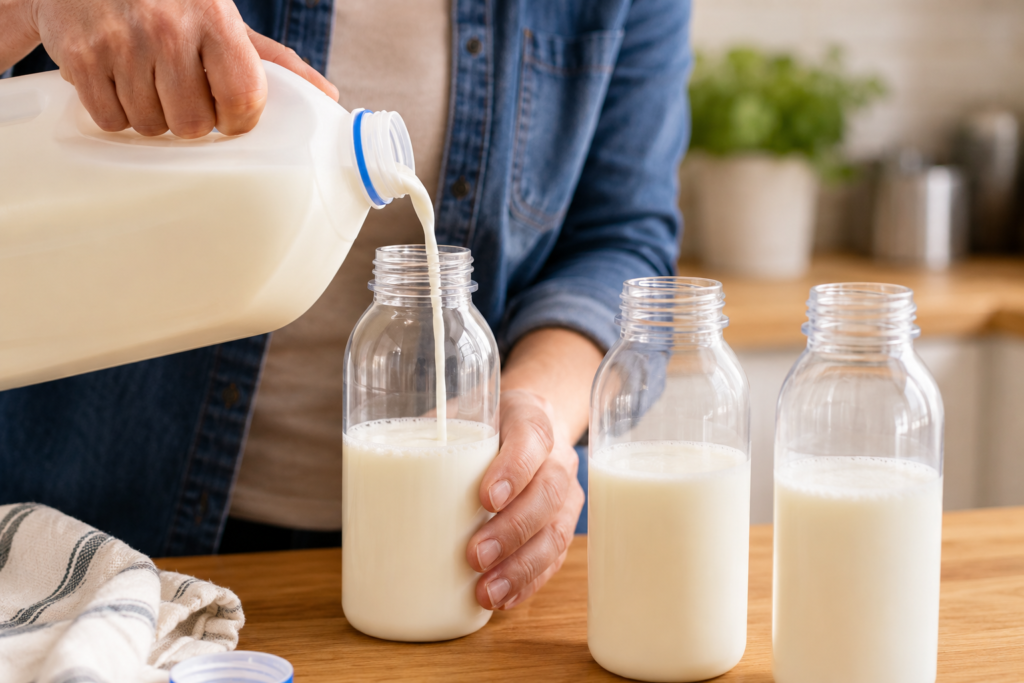
Successful long-term storage requires using proper airtight containers that allow the liquid to expand safely as it transforms into solid ice. Selecting the right vessel prevents cracks and keeps your pantry-friendly items safe from picking up unpleasant odors.
Can You Freeze Skimmed Milk in Plastic Bottles?
Yes, standard plastic containers work beautifully as long as you leave at least one to two inches of empty headspace at the top of the bottle. Failing to leave this safety gap will cause the expanding ice to rupture the plastic seals, leading to messy spills inside your clean appliance.
Freezing methods can vary slightly between processed and unprocessed dairy products, which is why many readers also compare preservation techniques in guides like can you freeze fresh raw milk.
Can You Freeze a Gallon of Skim Milk?
Yes, you can place a full commercial jug directly into the freezer, provided you pour out at least one cup of liquid beforehand to accommodate expansion. Based on USDA data, industrial plastic jugs are designed to flex slightly, but removing a small portion first guarantees the container will not burst under pressure.
Handling Special Varieties and Brands
Can you freeze semi skimmed milk: Yes, this partially defatted version freezes exceptionally well, though it requires a gentle shake after thawing to blend the small fat particles back together.
Can you freeze cravendale semi skimmed milk: Yes, this specific filtered brand can be frozen normally, but it should be consumed promptly once defrosted to enjoy its fresh signature taste.
Can you freeze evaporated skim milk: Yes, you can freeze this concentrated baking liquid, but you must transfer it out of the original metal can into a freezer-safe glass or plastic container first.
👉 To understand how standard condensed baking items behave in cold temperatures, review our guide on can you freeze sweetened condensed milk.
How Long Does Skim Milk Last?
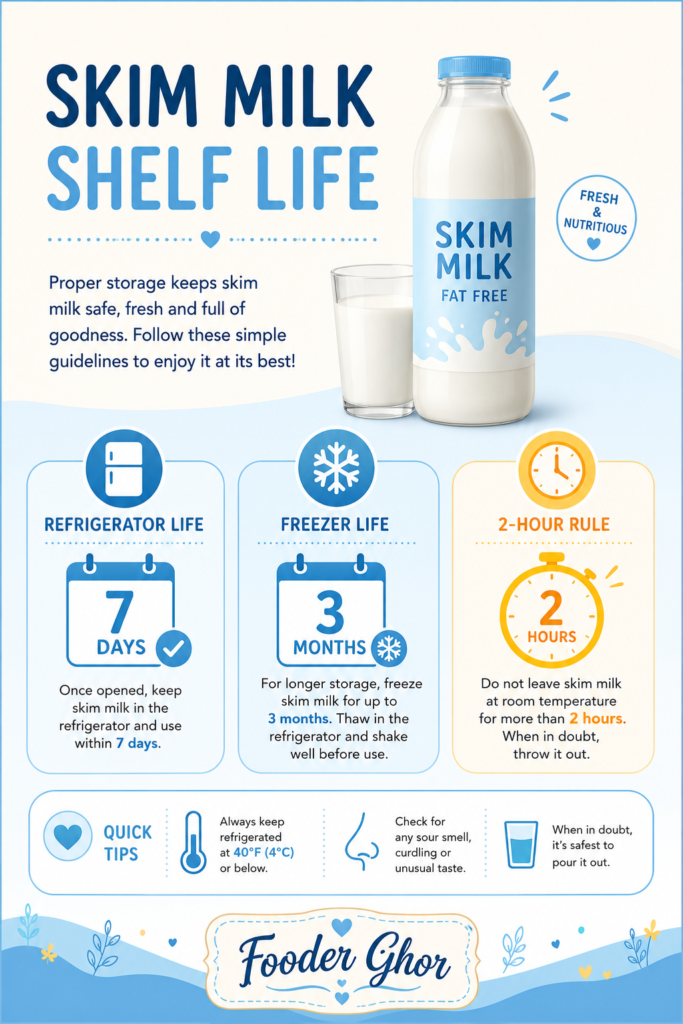
The overall shelf life varies dramatically depending on whether the container remains sealed, its current temperature, and the specific style of processing used during manufacturing. Keeping track of these dates is an essential part of managing a safe family kitchen.
Refrigerator and Freezer Time Limits
In general, an unopened carton stays generally maintains best quality in the refrigerator for around five to seven days past the printed sell-by date. Once you break the factory seal, the liquid remains safe for roughly seven days under continuous refrigeration before spoilage risks begin to rise.
According to nutrition information published by the USDA, frozen fat-free dairy retains optimum flavor quality for up to 3 months when kept at zero degrees.
Here is a quick reference table for managing your daily storage timelines.
| Storage Condition | Unopened Carton | Opened Container |
| Standard Refrigerator (35°F to 40°F) | 5 to 7 days past date | Exactly 7 days |
| Deep Freezer (0°F or colder) | Up to 3 months | Up to 1 month |
| Room Temperature (Above 40°F) | Maximum 2 hours | Maximum 2 hours |
Warning Note: To protect your family from foodborne illness, always discard any dairy that has remained out on the kitchen counter for longer than two hours.
Specialized Lifespans: Powdered and Filtered Versions
How long does skim milk powder last: This dry ingredient can remain shelf-stable for extended periods when stored in a cool, dry place in an airtight container.
How long does semi skimmed milk last once opened: This medium-fat liquid follows the same rules as fat-free options, requiring consumption within seven days of breaking the seal.
👉 For guidelines on tracking freshness timelines for raw herd selections, check out our article on how long does fresh cows milk last.
Does Skim Milk Need to Be Refrigerated?
All liquid varieties must remain chilled below 40 degrees Fahrenheit continuously to prevent naturally occurring spoilage bacteria from multiplying rapidly. The only exception is dry powdered dairy, which can safely sit in a sealed pantry bag until you mix it with water.
Research from the CDC shows that perishable dairy left in the temperature danger zone between 40 and 140 degrees can become hazardous within a very short window. For this reason, putting your groceries away immediately after returning from the supermarket is a critical habit for everyday cooking.
How to Tell if Skim Milk Has Gone Bad
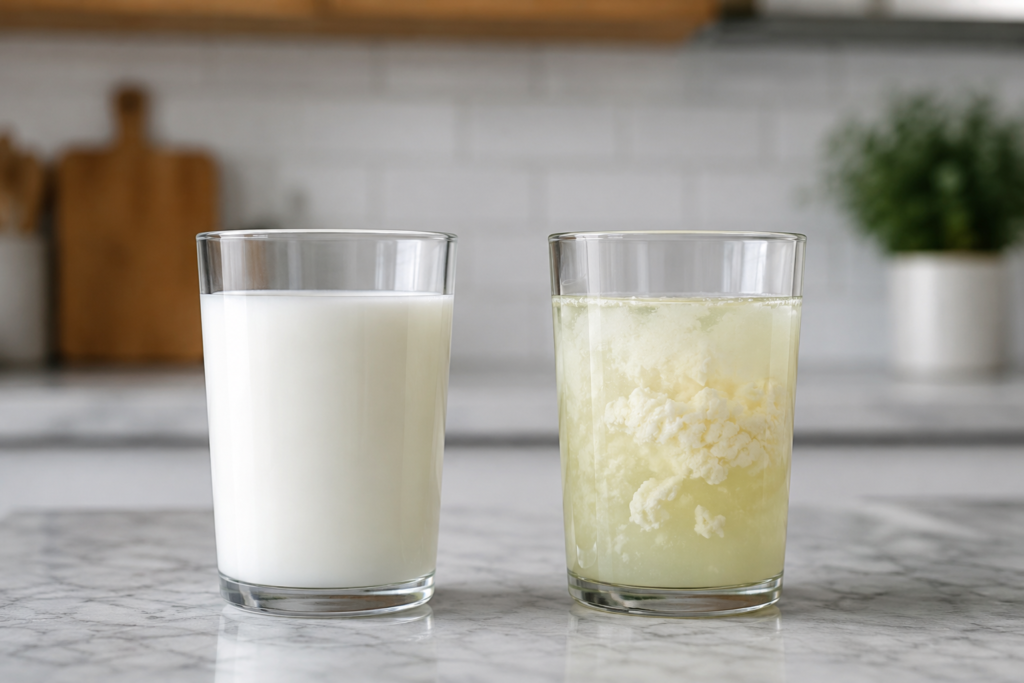
Determining if your stored liquid is still safe involves conducting a few simple sensory checks using your eyes, nose, and a clean glass container. Expiration dates are helpful guides, but physical changes provide the most reliable evidence of real food spoilage.
Understanding spoilage signs across different dairy products is equally important, which is why many readers also explore storage timelines in guides like how long can evaporated milk last.
The Sniff, Texture, and Color Tests
In general, spoiled fat-free dairy will emit a sharp, sour, or vinegary odor that is immediately noticeable when you open the cap. The color may shift from a translucent white to a dull, yellowish tint, and you might notice small clumps or a slimy film forming along the edges of the plastic bottle. If the liquid looks thick or smells unusual, do not taste it for safety reasons. You should simply discard it in your outdoor trash bin immediately to keep your kitchen clean and sanitary.
Why Trust Fooder Ghor?
At Fooder Ghor, we provide educational resources focused on understanding the safe use, handling, and storage of different types of milk, including breast milk, cow’s milk, goat milk, and raw milk, based on publicly available guidance from trusted sources such as the CDC, FDA, USDA, and AAP. Some milk-related articles, particularly those involving maternal and infant feeding topics, are reviewed for clarity and presentation by nursing students with academic training in maternal and child health to help make information easier to understand. This content is provided for learning purposes only and does not offer medical advice.
Most Common Frequently Asked Questions
A: Yes, because it lacks fat content, it is slightly less prone to fat rancidity, allowing it to sometimes last a day or two longer than whole milk under identical conditions.
A: Yes, you can freeze the dry powder in airtight bags to protect it from moisture, extending its stable shelf life for several additional years.
A: Always thaw the container inside the refrigerator over 24 hours. Never leave it on the counter to defrost, as this violates standard safety rules.
A: This minor color change is completely normal and happens because the natural proteins shift during freezing. Gently shaking the container after thawing may help redistribute separated components.
Conclusion
In general, utilizing your home freezer is an excellent, safe option for extending the lifespan of your fat-free dairy supplies up to three months. By leaving proper expansion space in your plastic bottles and thawing the liquid safely inside the refrigerator, you can easily maintain great quality for everyday cooking. Always monitor your storage temperatures carefully to ensure a constant supply of wholesome ingredients for your family recipes.
Proper refrigeration and storage timelines remain important for all dairy products, which is why many readers also compare freshness periods in guides like how long does goat milk last.