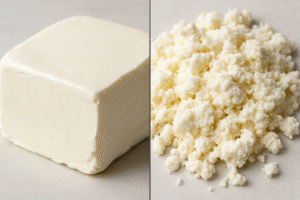
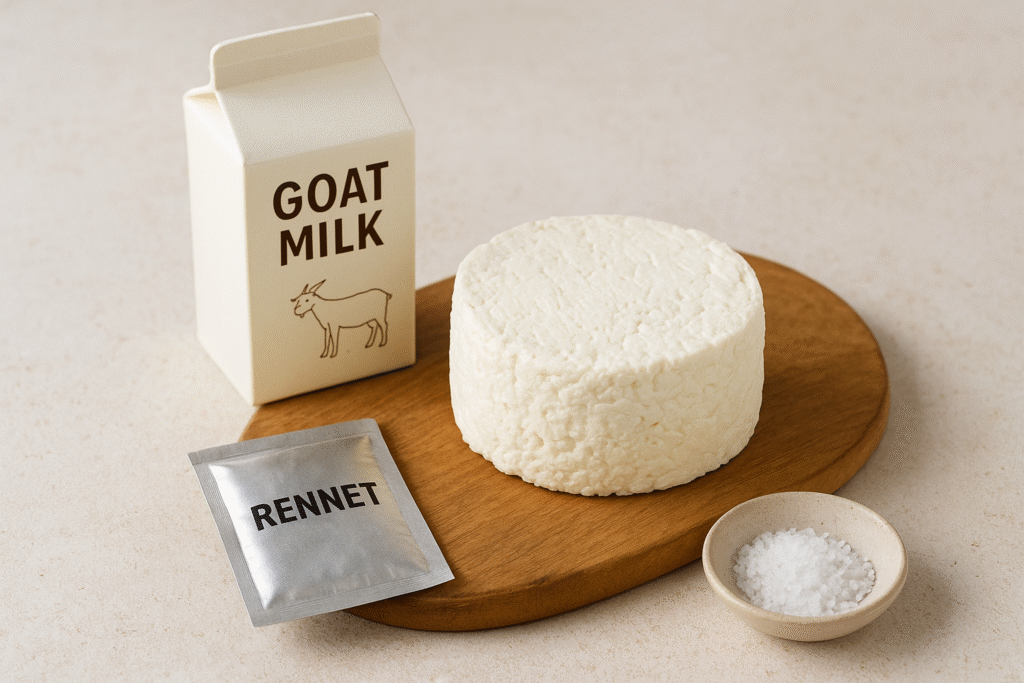
If you’ve ever wondered how to make chevre goat cheese at home, this easy recipe will show you the simple steps. If you have ever enjoyed the creamy, tangy flavor of chevre, you will love how easy it is to make your own at home. This gentle recipe uses just a few ingredients and basic kitchen tools, making it a perfect DIY project for moms who enjoy fresh, wholesome dairy for their families.
Chevre, or soft goat cheese, has a light and refreshing flavor that pairs beautifully with salads, pasta, or even breakfast toast. Making it at home not only saves money but also gives you full control over the freshness and quality of the ingredients.
What You Need: Simple Ingredients and Tools
To start making chevre goat cheese, you only need three main ingredients:
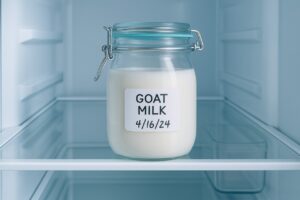
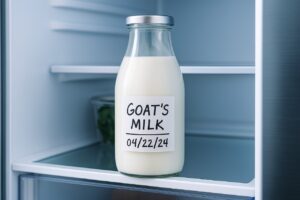
- Fresh pasteurized goat milk (avoid raw milk for safety)
- Mesophilic starter culture or mild rennet
- Non-iodized salt
You will also need:
- A thermometer
- A clean cheesecloth
- A colander
- A glass or stainless-steel pot
Keep everything clean and dry to prevent unwanted bacteria.
Step-by-Step Guide on How to Make Chevre Goat Cheese at Home
Step 1: Heat the Milk
Pour the goat milk into a large pot and gently heat it to around 85°F. Stir occasionally to prevent sticking. Do not let it boil. Maintaining this temperature helps good bacteria grow safely.
Step 2: Add Culture or Rennet
Once the milk is warm, sprinkle the starter culture or add a few drops of rennet. Stir slowly using a wooden spoon. Cover the pot with a clean towel and let it rest undisturbed for 8 to 12 hours. During this time, the milk will thicken and form soft curds.
Step 3: Check the Curd
When the surface looks like soft yogurt and you can see clear whey separating, the curd is ready for draining.
Draining the Curds: Achieving the Perfect Creamy Texture
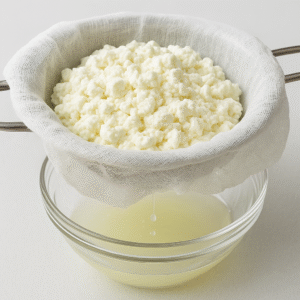
Line a colander with a cheesecloth and carefully pour the curds into it. Let the whey drain slowly. Gather the corners of the cloth and hang it over a bowl for 6 to 12 hours.
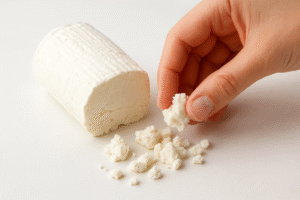
- Less draining time makes softer cheese.
- More draining time gives a firmer texture.
When learning how to make chèvre goat cheese, patience during draining helps achieve perfect texture.
For better understanding of cheese texture and milk proteins, you can read more from the Dairy Research Institute.
Salting and Flavoring Your Homemade Chevre

Once the cheese reaches your desired texture, transfer it to a clean bowl. Add salt and mix gently. You can also add herbs, pepper, or a drizzle of honey for extra flavor.
For inspiration, you can discover what goat cheese tastes like and experiment with flavor pairings.
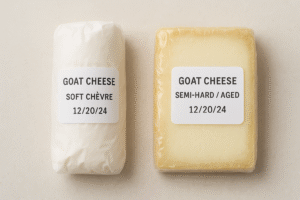
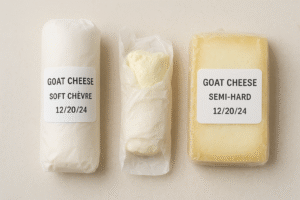
Storage and Shelf Life of Homemade Goat Cheese
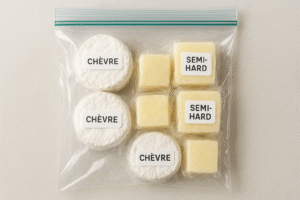
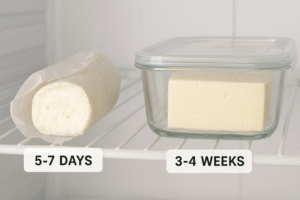
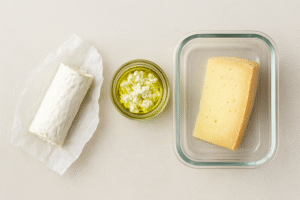
Homemade goat cheese is best enjoyed fresh. Store it in an airtight container in the refrigerator for up to 5 to 7 days.
If you want to keep it longer, properly store your fresh chèvre following safe refrigeration tips.
Always remember that homemade cheese has no preservatives, so freshness matters.
A Crucial Note on Raw vs. Pasteurized Milk
It is very important to use pasteurized goat milk when making cheese at home, especially if you are pregnant or preparing food for children. Raw milk may contain harmful bacteria such as Listeria or E. coli.
Learn more about food safety and pasteurized milk from the U.S. Food and Drug Administration (FDA) or the Centers for Disease Control and Prevention (CDC).
FAQ: DIY Chevre Troubleshooting
Q1: Why won’t my milk curdle?
The milk may have been too hot or the starter culture inactive. Keep the temperature below 90°F and use fresh culture.
Q2: Can I make chèvre without rennet?
Yes. Mesophilic culture alone works well for soft cheese like chèvre.
Q3: How long should I let the cheese drain?
Around 6 to 12 hours depending on the texture you like.
Q4: Why does my cheese taste sour?
Too much culturing time can increase acidity. Shorten the resting period next time.
Q5: Can I freeze homemade chèvre?
You can freeze it in an airtight container for up to 2 months, but the texture may become slightly crumbly after thawing.
Q6: What flavors go best with chèvre?
Fresh herbs, garlic, honey, or crushed pepper add amazing variety.
Conclusion
Making chevre goat cheese at home is simple, satisfying, and safe when done with pasteurized milk. It brings a taste of freshness and creativity to your kitchen. With a few easy steps and the right care, you can enjoy delicious homemade cheese that your whole family will love.
Now that you know how to make chevre goat cheese, enjoy your fresh, creamy results.