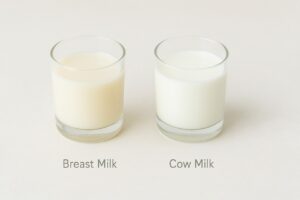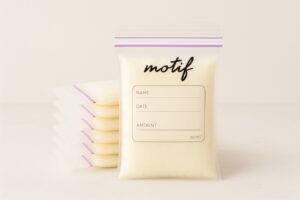
Many new moms get concerned when their breast milk looks thin or watery — especially compared to the creamy, thick milk they see in photos.
But here’s the good news: not all breast milk looks the same, and milk that appears less fatty can still be perfectly healthy.
Let’s explore why this happens, how foremilk and hindmilk differ, and practical ways U.S. moms can ensure a richer, balanced feed every time.
Why Breast Milk May Look Less Fatty
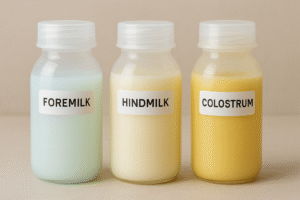
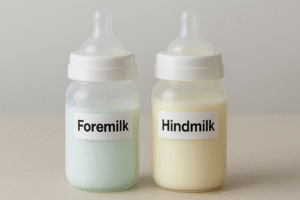
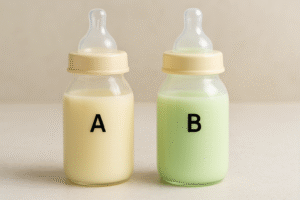
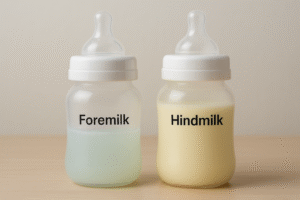
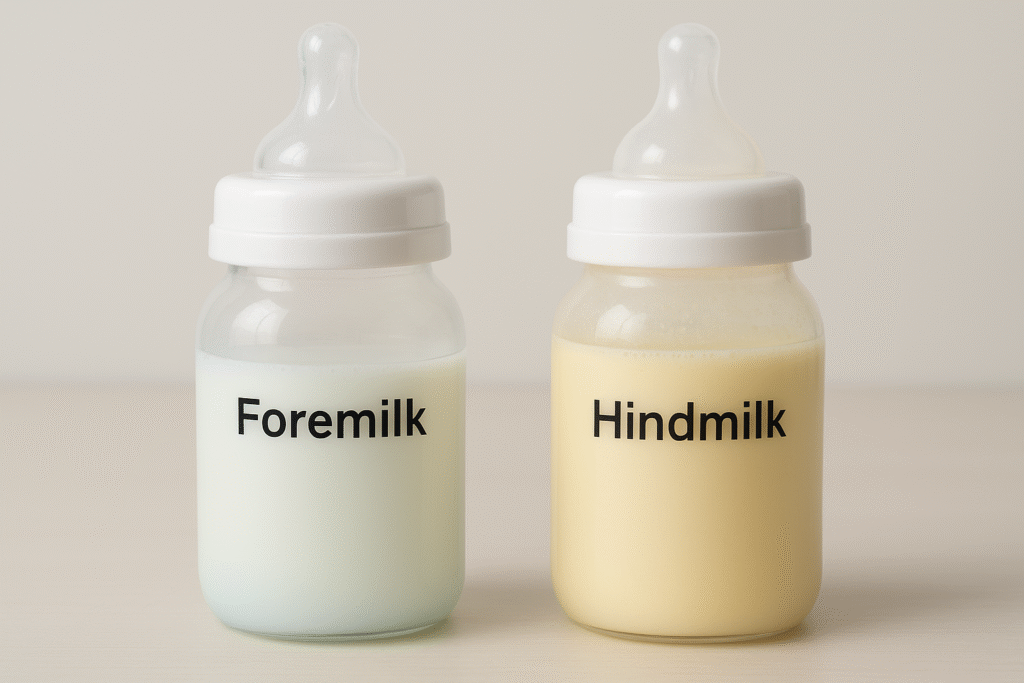
Breast milk’s fat content naturally changes throughout the day and even within a single feeding. The first milk, called foremilk, is lighter and more watery — it quenches your baby’s thirst. The milk that follows, hindmilk, is creamier and higher in fat for growth and satiety.
If your milk often looks thin or less creamy, these may be the reasons:
- Short Pumping Sessions — Ending too early means you’re collecting mostly foremilk.
- Skipping Feeds — Long gaps can cause uneven fat distribution.
- Overactive Letdown — A fast milk flow can prevent your baby from reaching hindmilk.
- Weak Pump Suction — Inefficient suction doesn’t draw out the denser milk.
- Improper Storage — Fat sticks to container walls if milk isn’t swirled before feeding.
Step-by-Step: How to Ensure Balanced Milk
- Pump Longer from Each Breast
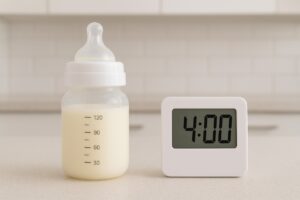
Keep pumping for 15–20 minutes per session so that fatty hindmilk comes through.
👉 Read more in How Long Do I Pump Breast Milk? (U.S. Moms’ Complete Pumping Duration Guide 2025). - Massage Before Pumping
Gently compress the breasts to move fat globules toward the ducts. - Empty One Breast Fully Before Switching
This ensures your baby receives both hydration and rich calories from one side. - Don’t Skip Night Sessions
Nighttime milk is naturally richer in fat due to peak prolactin levels. - Store Carefully
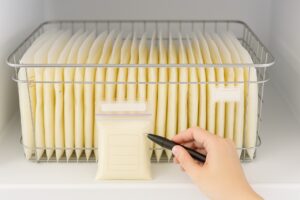
Always chill immediately and swirl (never shake) before feeding.
💡 According to CDC’s U.S. Breast Milk Handling Guidelines, gentle swirling helps preserve fat distribution.
Hormonal Link: Why Night Feeds Matter
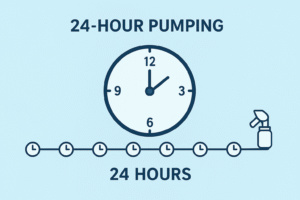
Skipping 3–4 a.m. sessions can reduce overall milk fat.
At night, prolactin and progesterone levels are highest — the hormones that support both milk volume and fat quality.
Even one early-morning pump helps you collect richer milk for later feeds.
What If Milk Still Looks Thin?
Don’t worry — thin milk can still be full of nutrition. To improve balance:
- Power Pumping: Mimics cluster feeding and boosts hindmilk production.
- Stay Hydrated: Dehydration can make milk look watery.
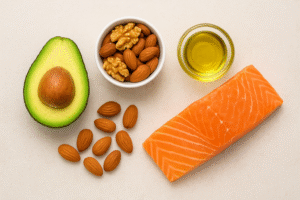
- Add Healthy Fats: Eat omega-3-rich foods (like avocado, nuts, and salmon) to support fat content.
👉 Learn detailed diet strategies in How to Produce Fatty Breast Milk Naturally.
For more about dietary influence, check Best Foods to Boost Breast Milk Quality – Healthline.
How to Store Fatty Milk Properly
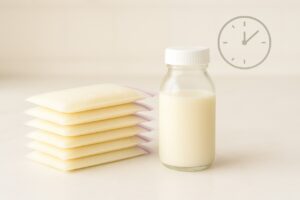
- Chill immediately after pumping.
- Swirl gently (never shake) before each feed.
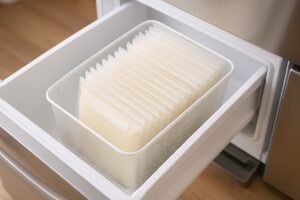
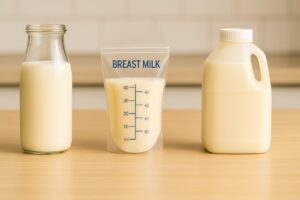
- Store milk flat in bags or upright bottles.
- Use within 4 days refrigerated or 6 months frozen.
If fat remains stuck after swirling, check your fridge temperature — it should stay near 39°F / 4°C to prevent separation.
Because for every new mom, understanding your milk’s natural variations means less anxiety — and more confidence with every bottle. 🍼💛
FAQ: Common Questions About Fatty Milk
Q1: Does watery milk lack nutrients?
A: No — even watery milk contains all essential proteins, carbs, and antibodies.
Q2: Can diet make my milk fattier?
A: It affects the type of fat more than amount, but whole-food fats like avocado and nuts help.
Q3: Should I always pump longer for more fat?
A: Yes, up to comfort level — avoid pain or nipple soreness.
Q4: Why does morning milk look creamier?
A: Because longer intervals between feeds allow more hindmilk collection.
Conclusion: Don’t Judge by Appearance
Breast milk that looks thin isn’t “low quality.” It’s simply part of your body’s natural cycle of foremilk and hindmilk balance.
Prioritize full emptying, consistent pumping, and proper storage to ensure your baby gets all the fat-rich nutrition they need.
👉 For related insights, read Why Is My Breast Milk Foamy? to understand how texture and fat content connect.