Milk dispensers have become essential in every modern cafeteria, restaurant, and commercial food-service environment. They help maintain consistent milk temperature, reduce waste, and improve hygiene — making them indispensable for smooth operations.
This complete guide explains everything about cafeteria milk dispensers and milk dispenser machines, their working process, benefits, maintenance, and the right way to choose one for your business.
Why Cafeterias Need a Dedicated Milk Dispenser:
In cafeterias or restaurants, milk is used continuously for coffee, cereals, desserts, and more. Storing milk in bottles or jugs often leads to temperature fluctuations, spillage, and bacterial contamination.
A milk dispenser machine eliminates these problems by maintaining an ideal temperature range (33°F–40°F), preventing waste, and allowing quick and hygienic serving. For busy cafeterias and self-service setups, this ensures both efficiency and safety.
How a Milk Dispenser Machine Works:
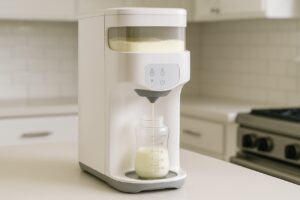
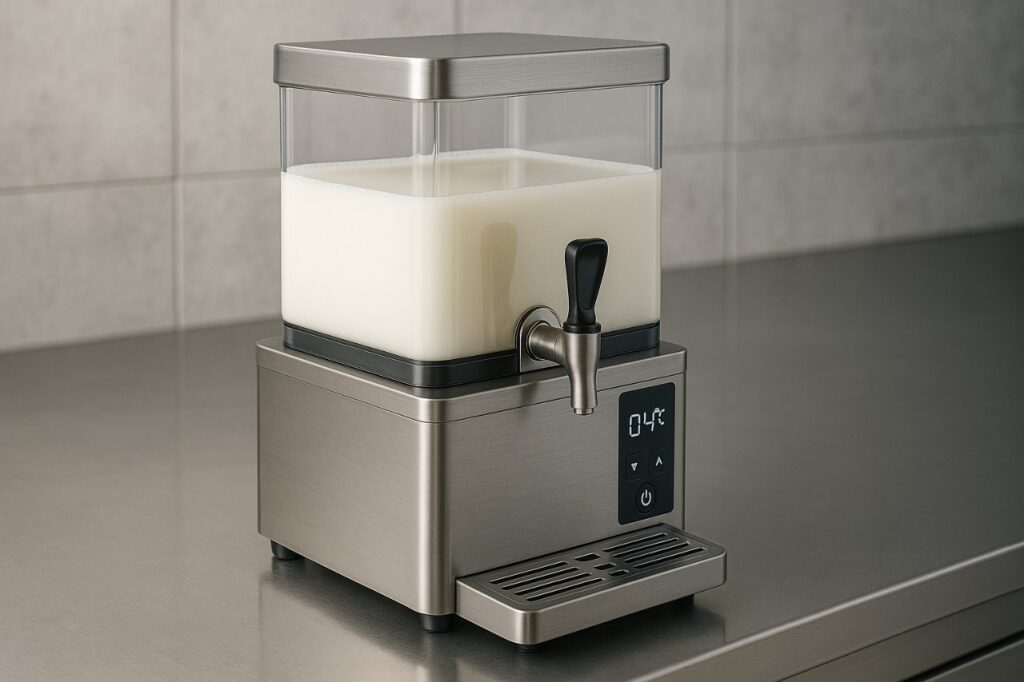
A cafeteria milk dispenser functions like a refrigerated tank system. The milk is stored inside a stainless-steel or food-safe container. A cooling compressor keeps the milk fresh, and a valve or spout dispenses the milk easily when required.
Modern dispensers feature digital temperature control, insulated tanks, touch-free sensors, and automatic shut-off systems that stop dripping and maintain hygiene.
This makes them reliable for commercial setups where hundreds of servings happen daily.
For a more detailed look into home and commercial dispensers, check our Milk Dispenser Guide.
Gravity-Fed vs Pump-Driven Milk Dispensers:
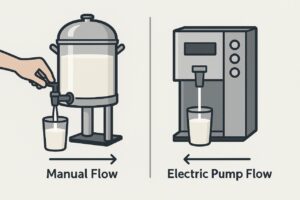
There are mainly two types of cafeteria milk dispensers based on how the milk is served.
Gravity-Fed Dispensers:
These are simple systems that allow milk to flow naturally through a spout using gravity. They are energy-efficient, affordable, and suitable for smaller cafeterias with lower volume.
Pump-Driven Milk Dispenser Machines:
These are advanced dispensers powered by electric pumps that push milk evenly through a nozzle. They deliver faster service, maintain stable temperatures, and are perfect for large-scale use in hotels, schools, or hospitals.
The pump system also allows precise portion control and prevents manual contact with milk, improving hygiene and efficiency.
Benefits of a Milk Dispenser Machine in Cafeterias:
Using a professional-grade milk dispenser provides multiple advantages for commercial kitchens and cafeterias.
It ensures consistent milk temperature and quality.
It saves time during busy hours by speeding up service.
It reduces waste and operational costs.
It prevents contamination through contactless serving.
It maintains hygiene and meets food safety standards.
Cleaning and Maintenance for Food Safety:
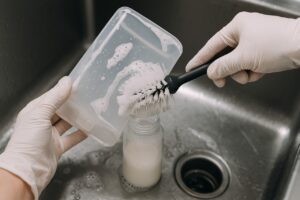
Cleaning your dispenser daily is essential to ensure safe dairy service and maintain health standards.
Start by emptying the milk container completely at the end of the day.
Rinse the tank and spout with warm water to remove residue.
Wash all detachable parts (like nozzles and drip trays) using mild detergent and a soft brush.
Rinse thoroughly and let them air dry.
Once dry, reassemble carefully before refilling the next day.
For safety and temperature control, follow the official CDC Food Safety Guidelines for Dairy Handling.
Design and Material Considerations:
Cafeteria milk dispensers are typically made from stainless steel for durability and ease of cleaning.
Inside, the milk tank is insulated to maintain temperature and prevent bacterial growth.
Always choose models that are:
BPA-free and food-grade.
Easy to disassemble and dishwasher-safe.
Certified by NSF for food safety compliance.
Some dispensers even include glass viewing windows to check milk levels without opening the lid, reducing air exposure.
For better storage compatibility, explore our Milk Storage Containers comparison post.
Where Cafeteria Milk Dispensers Are Used:
These dispensers are ideal not only for cafeterias but also for other commercial environments like hotels, schools, hospitals, and corporate kitchens.
They ensure continuous service, easy refilling, and energy-efficient cooling throughout the day.
In larger settings, they can also be connected to automated beverage systems for seamless milk flow.
Maintenance and Troubleshooting:
Perform a general inspection at least once a month.
Check compressor vents to make sure they are clean.
Replace worn-out gaskets and seals.
Avoid overfilling the milk tank.
If the cooling is inconsistent, clean the condenser coils and check the ventilation.
Proper maintenance ensures consistent performance and extends the life of the machine up to 8 years or more.
Cafeteria vs Household Milk Dispensers:
Cafeteria dispensers are designed for continuous operation, large capacity, and strict hygiene.
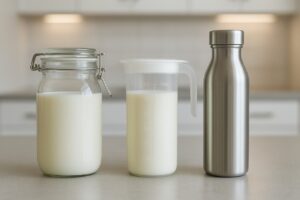
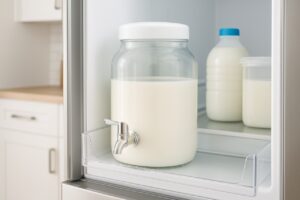
Household dispensers, on the other hand, are smaller, typically made of plastic or glass, and meant for light use.
Commercial dispensers use industrial compressors, while home models often rely on thermoelectric cooling.
That’s why cafeteria dispensers are built with durability, fast flow rates, and high-volume service in mind.
Eco-Friendly and Energy Efficiency:
Many new commercial milk dispensers use eco-friendly refrigerants and energy-saving compressors.
These not only reduce operational costs but also lower environmental impact.
Some advanced models feature smart sensors that track milk level and temperature — allowing cafeteria managers to monitor usage and reduce waste.
If you’re looking for smaller, home-friendly milk solutions, you can check out our detailed post — “The Ultimate Guide to Fridge Milk Dispensers” — which explains how compact dispensers work for everyday family use while maintaining freshness.
Frequently Asked Questions:
How often should I clean a cafeteria milk dispenser?
At least once daily, and twice a day for heavy use.
Can I use it for non-dairy milk?
Yes, but always keep separate dispensers for dairy and non-dairy products to avoid contamination.
How long can milk stay fresh inside a dispenser?
Up to 24 hours at or below 40°F, if properly stored and handled.
Is touch-free operation worth it?
Yes. Touch-free dispensers improve hygiene, reduce cross-contamination, and are more efficient for self-service setups.
Conclusion:
Cafeteria milk dispensers and milk dispenser machines are vital for maintaining safe, efficient, and hygienic milk service in any commercial setting.
By choosing the right dispenser and following proper cleaning protocols, you can ensure consistent milk quality and streamline service.
Whether you manage a school, restaurant, or hospital cafeteria, these machines offer the perfect balance of convenience, food safety, and professionalism for your operation.