Skip to content


Navigating the grocery aisles for clean, plant-based alternatives can feel challenging for health-conscious parents. If your household is managing dairy sensitivities or transitioning toward a vegan lifestyle, finding suitable dessert binders is a major priority. Traditional sweetened condensed dairy milk is a staple in family baking, but it leaves many lactose-intolerant children out of the fun. Enter a remarkable tropical alternative that has taken modern kitchens by storm.
Understanding exactly what is condensed coconut milk allows you to recreate classic family treats with total dietary confidence. This comprehensive guide breaks down its composition, evaluates its shelf life, and analyzes its nutritional values so you can make informed decisions for your household.
What You Will Learn in This Guide
The foundational definition and culinary role of this thick tropical syrup.
The critical differences between commercial sweetened versions and standard culinary bases.
Safe refrigerator storage timelines and effective long-term freezing methods.
A clear breakdown of nutrition facts and health metrics for your family.
How to spot the difference between regular sweetened options and sugar-free varieties.
👉 If you are currently evaluating other types of concentrated dairy substitutes for your pantry, explore our baseline guide on how long does fresh sweetened condensed milk last.
Quick Answer: What is Condensed Coconut Milk?
Condensed coconut milk is a thick, sticky, plant-based syrup made by simmering full-fat coconut milk with sugar until most of the water content evaporates. The resulting concentrate possesses a rich caramel hue and a velvety texture that perfectly mimics traditional dairy-based condensed milk. This shelf-stable substitute is widely utilized in vegan baking, dairy-free dessert bars, and as a rich creamer for morning beverages.
👉 For parents tracking general liquid coconut foundations before concentration, check out our complete introductory manual on what is coconut milk.
What is Sweetened Condensed Coconut Milk?
To understand this specialized product, you must look at how manufacturers transform raw tropical ingredients into a baking asset. Commercial sweetened condensed coconut milk is a shelf-stable baking component composed primarily of two ingredients: heavy coconut cream and added sugar. The mixture undergoes a specialized thermal reduction process to remove roughly 60% of its moisture.
This processing results in a highly concentrated fluid with immense satisfying power. Unlike regular carton beverages, this thick syrup is specifically designed for structure and sweetness in recipes rather than direct drinking. It is an exceptional option for families managing lactose intolerance or cow’s milk protein allergies because it is completely free from animal proteins.
👉 For families who want to skip the commercial packaging and craft a fresh version from scratch at home, read our step-by-step recipe tutorial on how to make coconut condensed milk.
Sweetened Condensed Coconut Milk VS Condensed Coconut Milk
When scanning online grocery listings, the terminology used across product labels can sometimes confuse busy parents. Let us look closely at how these labels compare in the retail market.
In the vast majority of commercial settings, “Sweetened Condensed Coconut Milk” and “Condensed Coconut Milk” refer to the exact same product. Because the natural fats require sugar to achieve the correct sticky texture during factory evaporation, almost all standard canned versions contain added sugars. Manufacturers often use these terms interchangeably on front-facing packaging panels.
However, a strict distinction does exist if you encounter a rare, unsweetened condensed variety. An unsweetened version is simply a heavy culinary paste reduced without sugars, serving as a savory thickener. Always check the ingredient list on the back of the can to verify whether cane sugar or a plant alternative is present before starting your baking project.
According to the U.S. Food and Drug Administration (FDA), consumers should always review ingredient lists and Nutrition Facts labels to identify added sugars and serving differences in packaged foods.
If you want a broader look at the nutritional advantages of plant-based dairy alternatives, you can also explore our guide on coconut milk benefits to understand how coconut-derived products may support different dietary lifestyles.
How to Store Sweetened & Condensed Coconut Milk Safely
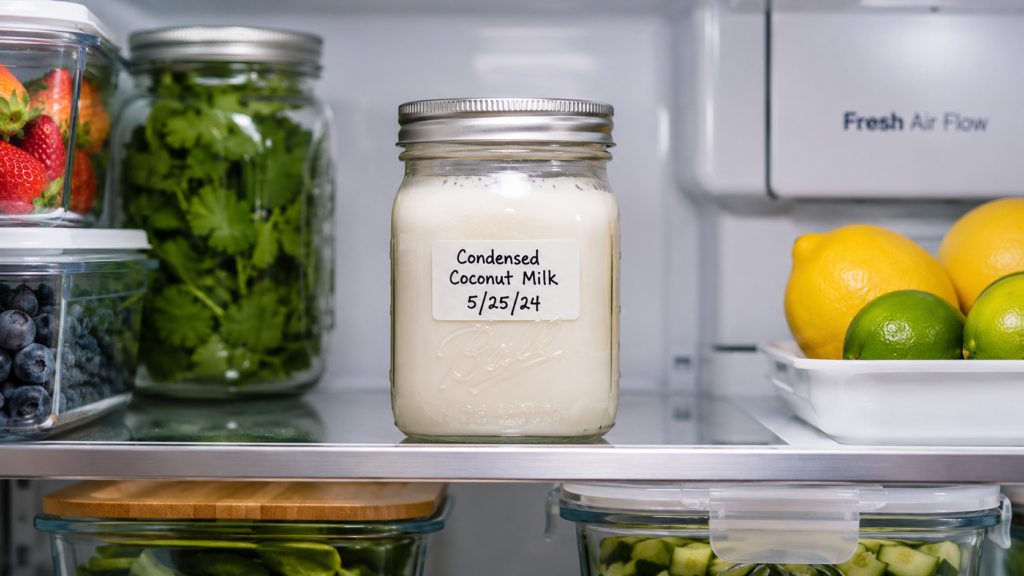
Proper kitchen preservation protects your household from food waste and maintains optimal ingredient quality. The storage requirements for this tropical syrup shift dramatically once you break the factory seal.
Unopened Can Storage
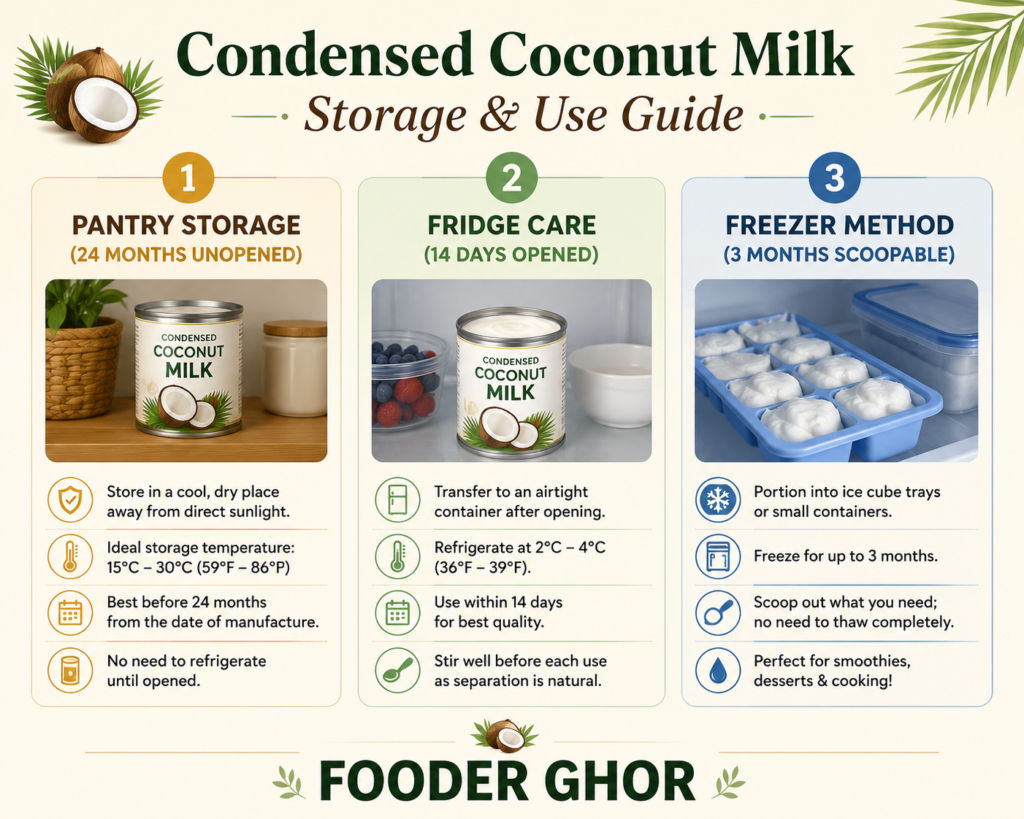
An unopened can is entirely shelf-stable due to the high sugar concentration and commercial canning process. Store your sealed cans in a cool, dark pantry away from direct oven heat or sunlight. Under these conditions, the product remains perfectly preserved for up to two years.
According to the U.S. Department of Agriculture (USDA), commercially canned foods are shelf-stable and can be safely stored in a cool, dry place for extended periods if the can remains unopened and undamaged.
Opened Container Storage
Once opened, the syrup becomes vulnerable to environmental moisture and airborne particles. Never store leftover syrup directly inside the opened metal can, as this can alter the flavor profile. Transfer the remaining liquid into a clean, airtight glass container immediately after measuring your recipe portion.
Place the sealed glass jar into the coldest section of your main refrigerator compartment.
👉 For families managing standard dairy components alongside plant alternatives, you can view our comparative guide on how to store fresh coconut milk for general kitchen organization.
Can You Freeze Sweetened & Condensed Coconut Milk?
If your weekend baking project only requires half a can of syrup, utilizing your freezer is an excellent way to eliminate kitchen waste. The high sugar and fat content in this concentrated syrup alters how it responds to sub-zero temperatures.
Sweetened condensed coconut milk freezes exceptionally well when placed in proper storage gear. Because sugar lowers the freezing point of liquids, the syrup will not freeze entirely solid like a standard ice cube. Instead, it maintains a highly viscous, scoopable, taffy-like consistency even at 0°F.
To freeze it successfully, pour the leftover syrup into a heavy-duty, BPA-free plastic container, leaving a half-inch of space at the top for slight expansion. You can safely store the syrup in the freezer for up to three months. When you are ready to use it, there is no need for prolonged counter thawing. Simply scoop out the required portion and let it sit at room temperature for ten minutes before stirring it directly into your batter.
According to the U.S. Department of Agriculture (USDA), freezing is a safe method for extending the shelf life of many food products, but texture changes may occur depending on sugar and fat content.
How Long Does Sweetened & Condensed Coconut Milk Last?
Tracking expiration dates ensures your family enjoys fresh, delicious components during holiday baking seasons. The operational timeline of this plant concentrate depends heavily on temperature consistency.
An opened jar of commercial sweetened condensed coconut milk lasts for roughly 10 to 14 days in the refrigerator. The substantial sugar content acts as a natural preservative, slowing down typical spoilage far better than regular open milk cartons.
Here is a quick reference table for managing your kitchen inventory safely.
| Container Status | Storage Location | Maximum Safe Duration | Required Action |
| Unopened Metal Can | Cool Dark Pantry | 24 Months | Check Best-By Date |
| Opened Glass Jar | Refrigerator (<40°F) | 14 Days | Keep Tightly Sealed |
| Opened Plastic Tub | Deep Freezer (0°F) | 3 Months | Label with Freeze Date |
The U.S. Food and Drug Administration (FDA) recommends storing opened food products at or below 40°F (4°C) and following safe storage practices to maintain food quality and reduce contamination risks.
Warning Note: To protect your family from digestive discomfort, always discard any stored syrup that displays a dark sour smell or exhibits small mold spots along the inner lid.
👉 For broader timelines regarding standard alternative liquids, review our baseline report on how long does coconut milk last in the refrigerator.
Sweetened Condensed Coconut Milk Nutrition Label & Facts
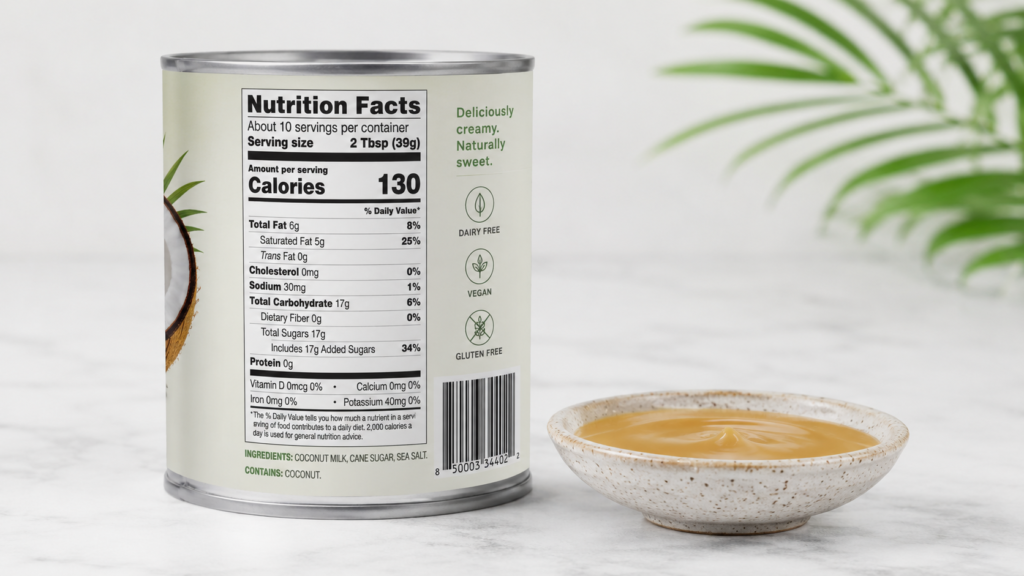
Reading supermarket packaging is a vital skill for managing family wellness goals. Let us look deeply into the standardized data panels found on a typical 11.2-ounce commercial can.
The nutritional profile of this condensed syrup is characterized by high caloric density and substantial carbohydrates. A standard two-tablespoon serving delivers roughly 100 calories and 3 grams of plant fat. The vast majority of these calories stem directly from the added sugars used to create the gooey texture.
From a mineral perspective, the product contains negligible amounts of calcium and iron. Unlike standard dairy versions, it does not provide natural vitamin loads unless specifically fortified by the manufacturer during production.
According to the U.S. Food and Drug Administration (FDA), Nutrition Facts labels help consumers understand serving sizes, added sugars, and nutrient content in packaged foods, allowing for more informed dietary choices.
👉 If you want to compare these concentrated numbers against a comprehensive raw fluid baseline, read our extensive evaluation on coconut milk nutrition to understand raw macro-nutrient ratios.
Is Sweetened & Condensed Coconut Milk Healthy?
When determining whether an ingredient deserves a regular spot in your family meal plan, evaluating its nutritional role is essential. Parents should view this product as a specialized baking asset rather than a health food.
Sweetened condensed coconut milk is not ideal for daily consumption or routine hydration. Because it contains high levels of added cane sugar, over-serving this syrup can quickly exceed the daily sugar thresholds recommended for growing children by pediatric experts.
However, as an occasional treat for holiday desserts, it serves as a highly dependable, allergen-safe alternative to dairy. It provides a dense source of energy from medium-chain triglycerides (MCTs) found naturally in fruit fats. It is a wonderful tool for inclusive family celebrations where dairy allergies are a concern, but it should be managed mindfully.
According to the American Academy of Pediatrics (AAP), added sugars should be limited in children’s diets, and sugary foods are best reserved for occasional consumption rather than daily intake.
If you want a broader evaluation of potential concerns, you can also read our guide on is coconut milk bad for you to understand how saturated fats, sugars, and serving sizes may affect overall dietary balance.
Unsweetened Condensed Coconut Milk Nutrition Label & Facts
For households focusing on strict carbohydrate management or low-sugar lifestyles, exploring the unsweetened variant provides an alternative path. This product features a radically different nutritional panel.
A standard serving of unsweetened condensed coconut milk contains zero grams of added sugars. Because the sugar carbohydrates are completely absent, the caloric count drops significantly, leaving you with roughly 45 to 60 calories per serving. The entire energy profile is derived from pure plant lipids.
The ingredient list on an unsweetened label is exceptionally brief, often containing nothing but pure coconut extract and water. This clean profile makes it highly useful for parents who prefer to control their own sweetening agents at home using alternative options.
According to the U.S. Food and Drug Administration (FDA), Nutrition Facts labels help consumers identify added sugars, serving sizes, and ingredient composition to make informed dietary choices.
👉 For families utilizing freezing methods across various kitchen ingredients, check out our baseline instructions on can you freeze coconut milk to avoid spoilage.
Is Unsweetened Condensed Coconut Milk Good for You?
The nutritional value of the sugar-free reduction makes it an excellent kitchen asset for health-conscious households. It delivers the luxurious mouthfeel of traditional cream without introducing inflammatory refined sugars into your child’s diet.
This unsweetened concentrate is highly beneficial for families following low-glycemic or ketogenic dietary guidelines. It provides a clean supply of lauric acid, which supports metabolic energy without causing sharp spikes in blood glucose levels.
It serves as a fantastic, nutrient-dense base for creating sugar-free puddings, creamy dairy-free dinner sauces, or healthy morning smoothies.
According to the American Academy of Pediatrics (AAP), added sugars should be limited in children’s diets, and healthier alternatives should be prioritized for regular meals.
👉 If you are managing multiple plant-based alternatives across your pantry shelves, you might also find our diagnostic report on can you freeze fresh raw milk useful for broader kitchen safety insight.
Why Trust Fooder Ghor?
At Fooder Ghor, we provide educational resources focused on understanding the safe use, handling, and storage of different types of milk, including breast milk, cow’s milk, goat milk, and raw milk, based on publicly available guidance from trusted sources such as the CDC, FDA, USDA, and AAP. Some milk-related articles, particularly those involving maternal and infant feeding topics, are reviewed for clarity and presentation by nursing students with academic training in maternal and child health to help make information easier to understand. This content is provided for learning purposes only and does not offer medical advice.
Most Common Frequently Asked Questions
Yes, it functions as a perfect 1:1 direct replacement in almost all baking recipes, including fudge, pies, and bars. It provides the exact same moisture and structural binding properties as dairy-based alternatives.
Natural plant fats can solidify and separate from the liquid sugars when exposed to cold refrigerator temperatures. Simply place the jar in a bowl of warm water for five minutes and stir thoroughly to restore the smooth texture.
It does possess a mild, sweet tropical flavor profile. However, when baked into complex desserts like chocolate brownies or pumpkin pies, the coconut note becomes very subtle and blends seamlessly into the background.
No, condensed plant syrups are highly processed baking ingredients containing dense sugars. They lack the vital nutrient balances required for infant development and should never be used as a substitute for breast milk or formula.
No, you should never freeze liquids inside sealed metal cans because the pressure can cause the seams to burst. Always transfer your leftover baking syrup into a clean, freezer-safe plastic container before storage.
Conclusion
Understanding what is condensed coconut milk empowers parents to create delicious, inclusive desserts that every family member can safely enjoy. This rich, plant-based concentrate offers a magnificent texture for vegan baking while keeping your kitchen entirely free from dairy allergens. By mastering proper refrigerator sealing techniques and utilizing your freezer for leftovers, you can maximize shelf life and reduce household waste. Keep your pantry stocked mindfully, check labels for added sugars, and continue cultivating a safe, joyful culinary environment for your loved ones.
If you are comparing storage methods for different dairy and dairy-free products, you can also explore our guide on can you freeze cow milk to learn safe freezing techniques for traditional milk options.